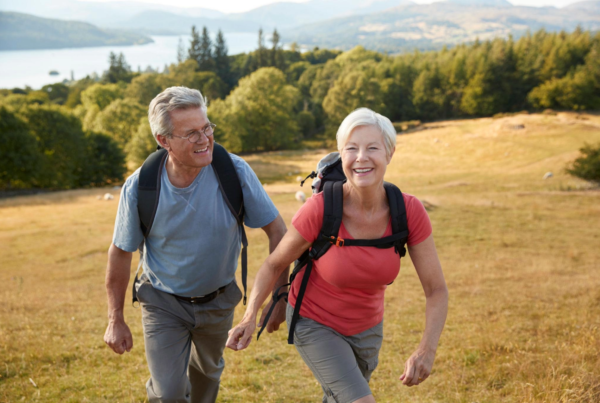
Discover why walking after meals helps control blood sugar, why muscle loss accelerates with inactivity, whether standing desks are beneficial, and how to combine aerobic exercise, strength, flexibility, and balance for lifelong vitality.
When Writing a Book Made Me Physically Weaker
Can you be intellectually productive while your body quietly deteriorates?
I discovered the answer while writing my book, Your Metabolic Shift.
For nearly a year, I spent countless hours researching, writing, editing, and correcting manuscripts. My mind was constantly working, but my body was increasingly stationary.
Eventually, I noticed something alarming. I had lost considerable muscle, and climbing the stairs, something I’d taken for granted, had become difficult.
I had experienced physical deconditioning.
My muscles had not disappeared overnight. They had gradually adapted to a lifestyle that demanded less of them.
This experience reinforced an important lesson:
Our bodies are designed to move. When we stop challenging them, they begin surrendering abilities we may have spent decades developing.
It also raised a question I frequently encounter in clinical practice:
Do we really need structured exercise to remain healthy, or can natural daily movement provide everything we need?
The answer is more interesting than you might expect.
Physical Activity Versus Exercise: An Important Distinction
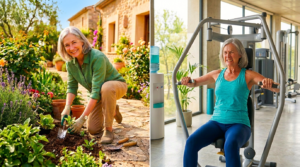
Physical activity includes every movement produced by skeletal muscles that requires energy.
Walking to the shops, gardening, cleaning, climbing stairs, carrying groceries, and playing with grandchildren all count.
Exercise is a particular type of physical activity: planned, structured, and repeated to improve fitness.
Think of physical activity as the water flowing through a river throughout the day. Exercise is the occasional surge that challenges the riverbanks.
Natural movement keeps our bodies engaged. Structured exercise develops specific capabilities.
Neither completely replaces the other.
Consider the world’s famous Blue Zones, regions associated with unusually high concentrations of long-lived people.
Traditional lifestyles in places such as Sardinia and Okinawa frequently involved walking, gardening, farming, and manual tasks.
People did not necessarily visit gyms or schedule exercise sessions. They wove movement into their daily routines.
However, Blue Zone observations are not controlled experiments. Longevity also reflects diet, social connections, environment, genetics, and other factors.
The lesson is not that exercise is unnecessary.
Movement should be a way of life, not merely an appointment in our diaries.
The 150-Minute Confusion: Why Does Vigorous Exercise Count Double?
The World Health Organisation recommends adults accumulate:
- 150–300 minutes of moderate-intensity aerobic activity weekly, or
- 75–150 minutes of vigorous-intensity activity, or
- An equivalent combination of both.
Adults should also do muscle-strengthening activities at least twice a week.
Why does vigorous activity require approximately half the time?
Because intensity changes the physiological demand placed on the body.
During brisk walking, your heart and lungs work harder than at rest. During running, they work considerably harder.
The recommendations recognise that vigorous activity delivers a greater cardiovascular stimulus per minute.
But 75 minutes of vigorous exercise is not necessarily better than 150 minutes of moderate exercise.
High-intensity exercise isn’t appropriate for everyone.
A simple guide is the talk test:
Moderate intensity: You can talk comfortably but cannot sing.
Vigorous intensity: You can speak only a few words before needing another breath.
For older adults, previously sedentary individuals, and people with certain medical conditions, a gradual progression is usually safer.
The objective is not exhaustion. It is adaptation.
“Doctor, I Do All the Housework. Isn’t That Enough?”
I frequently meet women who manage busy households, cook, clean, garden, and care for their families.
When I suggest additional physical activity, they understandably respond:
“But I’m active all day!”
They are often correct.
Housework and gardening contribute meaningfully to daily energy expenditure and reduce sedentary time.
However, the question is whether these activities sufficiently challenge all the systems required for healthy ageing.
Light housework may provide little cardiovascular stimulus. Repetitive tasks may not maintain leg strength, balance, or mobility.
On the other hand, digging, carrying heavy shopping, climbing stairs, and vigorous gardening can provide substantial exercise.
Rather than dismissing household activity, I suggest three practical questions:
Can you climb two flights of stairs without unusual breathlessness?
Can you rise repeatedly from a chair without using your hands?
Can you balance briefly on one leg while standing near a stable support?
These are useful functional indicators, although they are not substitutes for formal clinical assessment.
Being busy is valuable. Being physically capable is the goal.
Your Body Has Several Fitness Departments
Imagine your body as a company with different departments.
The heart and lungs manage oxygen delivery.
Muscles provide strength and movement.
The brain coordinates decisions and balance.
Joints and connective tissues permit movement.
Metabolic systems regulate fuel.
Different activities train these systems differently.
Aerobic activity can also support brain health, while resistance training improves glucose regulation and metabolic health.
This is why neither a marathon runner nor a bodybuilder necessarily represents complete physical fitness.
An endurance athlete may have excellent cardiovascular capacity but insufficient strength for some functional tasks.
A muscular individual may possess impressive strength but relatively poor aerobic fitness.
These are possibilities, not inevitable characteristics of either group.
Healthy longevity requires a balanced portfolio of physical abilities.
Muscle: Your Metabolic Savings Account
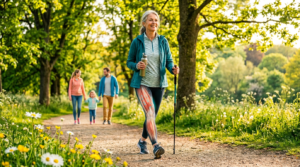
Muscle is much more than a means of lifting weights.
It is a major site of glucose disposal, an important reservoir of amino acids, and a foundation of physical independence.
When muscles contract, they can increase glucose uptake through pathways that partly bypass insulin signalling.
This makes movement especially valuable for people with insulin resistance.
Unfortunately, ageing and inactivity can gradually reduce muscle mass and strength, a process associated with sarcopenia.
You may have heard that people lose 70% of their muscles by age 70.
That is not an accurate general estimate.
Muscle loss varies enormously with activity, nutrition, illness, and individual circumstances. Strength may also decline faster than muscle mass.
Declining testosterone can contribute to muscle loss in men, but testosterone is only one part of the picture. Inactivity, inadequate protein, chronic illness, and age-related changes in muscle and nerves are also important.
The encouraging news?
Muscles remain responsive to resistance training even in advanced age.
Every appropriately challenging squat, chair rise, or resistance-band exercise is an investment in future independence.
Why Walking After Meals Is So Powerful
One of my simplest recommendations for people with diabetes is to walk for 10–15 minutes after eating.
Why does this work?
Imagine your bloodstream as a busy motorway after a meal.
Glucose enters circulation as carbohydrates are digested.
Your muscles act like warehouses that can remove glucose from that motorway.
When you walk, contracting muscles can take up more glucose.
This can reduce the post-meal glucose rise.
But is walking essential?
No. The important mechanism is muscle contraction, not walking itself.
Indoor marching, gentle dancing, repeated chair rises, and other suitable movements can also activate muscles.
Walking is particularly practical because it is accessible, inexpensive, and easy to repeat.
And why 10–15 minutes?
There is nothing magical about that precise duration.
It is a manageable period that can provide a useful metabolic stimulus. Even shorter activity breaks may help, while longer walks may offer additional benefits.
Starting soon after a meal can be particularly useful because glucose levels typically rise after a meal.
For people taking insulin or medicines that can cause hypoglycaemia, changes in activity may require additional glucose monitoring and medication advice.
Why Can Walking Improve Diabetes When Intensive Gym Training Doesn’t?
In clinical practice, I have seen patients achieve impressive improvements in glucose control through dietary changes, regular walking, and sometimes intermittent fasting.
Others struggle despite demanding gym programmes.
How can this happen?
Because metabolic health is not determined by exercise intensity alone.
Dietary intake, total energy balance, abdominal fat, sleep, medication, genetics, and time spent sitting all influence glucose regulation.
A person who exercises intensely for one hour but remains seated for the other waking hours may still accumulate considerable sedentary time.
Meanwhile, someone who walks frequently, eats appropriately, and maintains a healthy energy balance may achieve excellent metabolic results.
Exercise also cannot reliably compensate for consistently excessive calorie intake.
Intermittent fasting may help some people reduce energy intake, but it isn’t essential for improving diabetes and isn’t suitable for everyone.
Consider someone who burns about 300 calories during exercise. The body responds to the complete lifestyle, not simply the hardest workout.

Can I Count Using a Standing Desk as Physical Activity?
A standing desk can reduce sitting, but standing still is not a substitute for physical activity or exercise.
Standing generally burns only slightly more energy than sitting and provides little cardiovascular or muscle-strengthening stimulus.
Think of your body as a car. Sitting is like leaving the engine idling. Standing increases the demand slightly, but walking is when the wheels begin turning, and the engine starts doing meaningful work.
Standing desks can help break up prolonged sitting, especially for office workers and people who spend hours writing or working on computers.
However, replacing eight hours of sitting with eight hours of standing is not the solution. Prolonged standing can also cause discomfort and fatigue.
The best strategy is to alternate between sitting, standing, and moving.
Try standing periodically, walking for two to five minutes during work breaks, taking phone calls while walking, and performing simple calf raises or gentle movements beside your desk.
Remember: Standing breaks the sitting habit. Movement delivers the greater health benefits.
Deconditioning: The Hidden Danger of Retirement and Inactivity
My experience while writing Your Metabolic Shift illustrates a biological principle:
The body adapts to what we repeatedly ask it to do and to what we stop asking it to do.
When training stops, cardiovascular fitness can begin declining within weeks.
Prolonged inactivity can cause muscle strength, endurance, and metabolic function to deteriorate.
This process is called detraining or deconditioning.
It affects professional athletes, office workers, retirees, and people recovering from illness.
Former footballers may experience substantial changes after retirement, especially if their activity drops sharply while their eating habits stay the same.
However, they are not uniquely vulnerable, and deterioration is not inevitable.
An ordinary person who retires from an active occupation may experience a similar problem.
The solution is to replace lost occupational movement with intentional daily activity.
Retirement from employment should never mean retirement from movement.
Flexibility and Balance: The Forgotten Foundations of Independence
After 50, reduced mobility may begin to affect ordinary activities.
Bending to tie shoes, reaching overhead, turning the body, or getting up from the floor can become difficult.
Sometimes this feels like weakness.
However, weakness and stiffness are different problems that can coexist.
Strength is the ability to generate force.
Flexibility describes the range of movement available.
Balance helps us control our position.
All three deserve attention.
Simple habits can help:
Stretch the calves while waiting for the kettle.
Practise supported single-leg standing while brushing your teeth.
Perform controlled chair rises during television breaks.
Include gentle shoulder and hip movements after walking.
Older adults should also regularly incorporate progressively challenging balance and functional strength activities.
These small investments can help protect the ability to move confidently and independently.
Why Exercise Alone Often Disappoints for Weight Loss
Feeling hungry afterwards, they eat an extra snack with 400 calories.
Their exercise delivered cardiovascular and metabolic benefits, but it didn’t create the intended energy deficit.
This is one reason exercise alone often produces less weight loss than expected.
Appetite responses vary. Some people become hungrier, while others experience temporary appetite suppression.
The body may also compensate by reducing movement later in the day or changing energy expenditure.
Weight loss primarily requires a sustained energy deficit.
Dietary changes are often the most effective way to create that deficit, while exercise helps preserve health, fitness, and muscle during weight reduction.
Resistance training is particularly valuable for protecting lean mass.
Aerobic exercise can also reduce body fat, including visceral fat.
The best strategy combines appropriate nutrition, regular movement, resistance training, adequate sleep, and realistic expectations.
Remember:
The bathroom scale measures weight. It does not tell you how much of that weight is muscle or fat.

Where Does Our Daily Energy Go?
A commonly quoted estimate divides daily energy expenditure into:
70% for basic, life-saving bodily activities such as breathing, heart and circulation, 20% for physical activity, and 10% for processing food.
This is a useful illustration, but the percentages are not fixed.
Resting metabolic processes usually account for the largest share.
Physical activity expenditure varies greatly between sedentary and highly active individuals.
The thermic effect of food commonly contributes around 10%, depending on diet composition.
Importantly, physical activity includes both planned exercise and everyday movement, often called non-exercise activity thermogenesis (NEAT).
This explains why two people attending the same gym may have very different total daily energy expenditure.
One remains active throughout the day.
The other returns home and sits for hours.
The gym is only one chapter in the body’s daily energy story.
Your Practical Roadmap to Active Longevity
Rather than prescribing an intimidating fitness programme, I encourage patients to build movement into everyday life.
First, interrupt sitting. Stand, stretch, or move briefly every 30–60 minutes when practical.
Second, walk daily. Gradually build towards 150–300 minutes of moderate aerobic activity weekly.
Third, move after meals. Try 10–15 minutes of comfortable walking or another suitable indoor activity.
Fourth, strengthen muscles twice weekly. Include chair rises, squats, wall push-ups, resistance bands, or weights.
Fifth, practise balance and mobility. Add brief sessions throughout the week, with more structured balance work as you age.
Sixth, monitor progress beyond body weight.
Useful indicators include waist circumference, walking endurance, chair-rise performance, strength, and how easily you manage everyday activities.
You can assess body composition periodically using appropriate methods, but measurements such as bioelectrical impedance are estimates affected by hydration and other factors.
Finally, make movement sustainable. Choose activities you enjoy and can continue for years.
The most successful programme is not the one that leaves you exhausted.
It is the one that preserves your capabilities for the rest of your life.
If you found this discussion useful, you may be interested in my recently published book, “Your Metabolic Shift”, which explores these concepts in greater depth.
Frequently Asked Questions
- Is walking enough for healthy ageing?
Walking is an excellent foundation, but most people also benefit from muscle-strengthening and balance activities.
- Do I need to join a gym?
No. Resistance bands, bodyweight exercises, stairs, and suitable household activities can provide effective training.
- Is vigorous exercise dangerous after 60?
Not necessarily. Suitability depends more on health, fitness, experience, and gradual progression than age alone. People with concerning symptoms or significant medical conditions should seek individual assessment.
- Can I lose weight without exercise?
Yes. Dietary changes can produce weight loss, but physical activity improves health and helps preserve fitness and muscle.
- Can I build muscle after 70?
Yes. Progressive resistance training can improve muscle strength and function even in very old adults.
- Is ten minutes of movement after meals worthwhile?
Yes. Short bouts of post-meal activity can help reduce glucose excursions, particularly in people with impaired glucose regulation.
- How quickly can fitness disappear when I stop exercising?
Some cardiovascular adaptations can decline within weeks. Muscle changes depend on how long and how severely you’re inactive, as well as age, illness, and nutritional status.
- Should I measure body composition rather than weight?
Ideally, monitor both alongside waist circumference and functional performance. Body composition estimates are useful for trends but should not be treated as perfectly accurate.
The Take-Home Message
Physical activity supports healthy longevity through several complementary pathways.
Aerobic movement strengthens cardiovascular fitness.
Resistance training preserves muscle and physical capability.
Balance training helps prevent falls.
Mobility exercises maintain freedom of movement.
Frequent natural movement reduces prolonged sedentary exposure and supports metabolic health.
No single activity provides every benefit.
The Final Word: Don’t Just Add Years to Life; Add Life to Years
When I struggled to climb the stairs after months of writing, I was reminded that health is not simply the absence of disease.
It is the ability to live independently, move confidently, and continue doing the things that give life meaning.
A healthy body is not built exclusively in the gym.
It is built while walking to the shops, tending the garden, carrying groceries, playing with grandchildren, climbing stairs, and occasionally challenging our muscles and cardiovascular system beyond their usual demands.
Exercise builds capacity. Natural movement helps us use and maintain it.
The secret to healthy longevity is not to exercise harder and then spend the rest of the day sitting.
It is to create a life in which movement becomes as natural as breathing.
Move more. Sit less. Stay strong. And keep moving for life.
This article is intended for educational purposes only and should not replace personalised medical advice. Readers with existing medical conditions should consult their healthcare professional before making significant dietary or lifestyle changes.
References
The following peer-reviewed studies and authoritative guidelines support the article’s central recommendations. Foundational studies are included alongside more recent evidence.
- World Health Organisation. (2020). WHO Guidelines on Physical Activity and Sedentary Behaviour. Geneva: World Health Organisation. ISBN: 9789240015128.
WHO Physical Activity Guidelines - Bull, F. C., et al. (2020). World Health Organisation 2020 guidelines on physical activity and sedentary behaviour. British Journal of Sports Medicine, 54(24), 1451–1462.
DOI: 10.1136/bjsports-2020-102955.
Supports recommendations for aerobic activity, resistance training, and reducing sedentary behaviour. DOI - Ekelund, U., et al. (2019). Dose-response associations between accelerometry measured physical activity and sedentary time and all cause mortality: Systematic review and harmonised meta-analysis. BMJ, 366, l4570.
DOI: 10.1136/bmj.l4570.
Provides evidence linking greater physical activity, including light activity, with lower mortality risk. PubMed - DiPietro, L., Gribok, A., Stevens, M. S., Hamm, L. F., & Rumpler, W. (2013). Three 15-min bouts of moderate postmeal walking significantly improves 24-h glycemic control in older people at risk for impaired glucose tolerance. Diabetes Care, 36(10), 3262–3268.
DOI: 10.2337/dc13-0084.
A small experimental study supporting post-meal walking for glucose regulation. PubMed - Dunstan, D. W., et al. (2012). Breaking up prolonged sitting reduces postprandial glucose and insulin responses. Diabetes Care, 35(5), 976–983.
DOI: 10.2337/dc11-1931.
Demonstrates the acute metabolic benefits of interrupting prolonged sitting. DOI - Pontzer, H., et al. (2021). Daily energy expenditure through the human life course. Science, 373(6556), 808–812.
DOI: 10.1126/science.abe5017.
Examines changes in energy expenditure across the lifespan and the relationship with fat-free mass. PubMed - UK Chief Medical Officers. (2019). UK Chief Medical Officers’ Physical Activity Guidelines. Department of Health and Social Care.
UK Physical Activity Guidelines
Provides practical recommendations on aerobic fitness, muscle strength, balance, flexibility, and sedentary behaviour. - NHS. Physical Activity Guidelines for Older Adults.
NHS Guidelines for Older Adults
Offers accessible guidance on daily movement, appropriate exercise intensity, strength, and fall prevention.