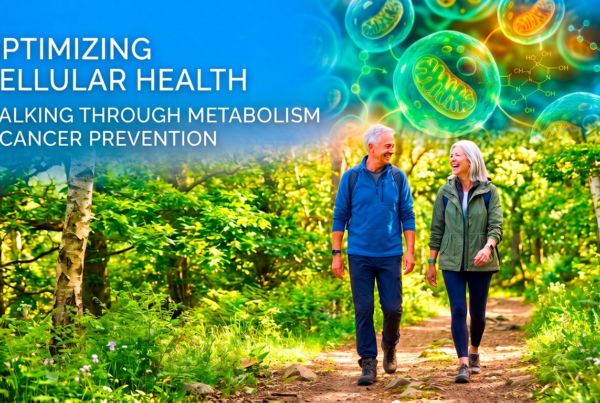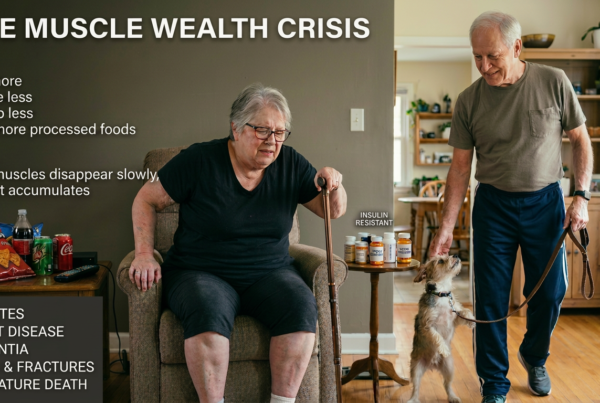
This article explores why health decline is often prematurely accepted, how the loss of belief can become a major barrier to recovery, and why scientific evidence suggests that meaningful improvements remain possible even in advanced age.
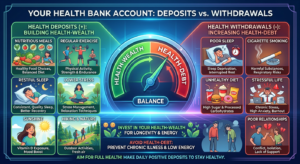
In my previous blog, I introduced the concept of Metabolic Wealth, the idea that health can be viewed much like a financial account.
Every healthy meal, every walk, every good night’s sleep, every resistance-training session is a deposit into your health account.
Every sugary drink, cigarette, stressful night, sedentary day, or chronic inflammatory insult is a withdrawal.
Over time, these deposits and withdrawals determine whether we accumulate Health Wealth or sink into Health Debt.
Many readers asked an important question:
“If I already have diabetes, obesity, arthritis, fatty liver disease, or heart disease, is it too late for me?”
The answer is reassuring:
Absolutely not.
Many people assume health follows a one-way path. They believe that once the disease appears, decline becomes inevitable.
Modern science tells a different story.
Health is dynamic. Even after the disease develops, we can often rebuild substantial metabolic wealth.
The challenge is knowing where to start.
The Health Balance Sheet
Imagine two people.
The first has no diagnosed disease but exercises little, sleeps poorly, carries excess visceral fat, and has rising insulin resistance.
The second person has type 2 diabetes but has started exercising, lost weight, improved sleep, reduced inflammation, and increased muscle mass.
Who is wealthier metabolically?
The answer is not always obvious.
Disease labels tell us very little about the direction of travel.
The more important question is:
“Is your metabolic wealth increasing or decreasing?”
Health is not a snapshot.
It is a trajectory.
The New Normal Trap
One of the greatest obstacles to health improvement is what I call the New Normal Trap.
Humans adapt remarkably well.
When eyesight slowly deteriorates, we hardly notice.
When hearing gradually declines, we compensate.
When weight slowly increases, energy levels fall, joints stiffen, and fitness declines, the changes occur so gradually that they become normal.
Each stage of deterioration becomes the baseline for the next.
People often say:
“I thought feeling tired all the time was just part of getting older.”
“I assumed everyone felt this way.”
“I didn’t realise how bad I felt until I felt better.”
The body quietly resets expectations.
This adaptation protects us psychologically, but it can blind us biologically.
The Belief Barrier
The biggest obstacle is not a lack of knowledge. It is a loss of belief.
Once strength is lost, it cannot return.
Once diabetes develops, deterioration is inevitable.
Once someone enters a nursing home, independent living is over.
The phrase:
“You’re 60 now. What do you expect?”
may be one of the most destructive health messages in modern society.
It transforms a potentially reversible decline into an accepted destiny.
When people believe improvement is impossible, they stop trying.
They stop making deposits into their health account.
The real challenge is not simply fighting disease. It is fighting resignation.
The Roger Bannister Effect
In 1954, Roger Bannister broke the four-minute mile.
For years, experts believed it was physiologically impossible.
Then Bannister proved otherwise.
Within weeks, others followed.
The barrier was not only physical.
It was psychological.
Health transformation may follow the same principle.
Most people have never seen someone reverse diabetes.
Most people have never seen a frail older adult regain strength.
Most people have never seen someone leave a nursing home and return to independent living.
Without examples, improvement feels impossible.
Without possibility, motivation disappears.
What we need are more visible examples of metabolic transformation.
Every community needs its Roger Bannisters.
People who demonstrate that decline is not always permanent.
The Nursing Home Study: A Medical Roger Bannister Moment
This is where the famous Fiatarone study becomes extremely powerful.
In 1990, Maria Fiatarone and colleagues studied frail nursing-home residents aged 86 to 96 years.
Many required walking aids.
Many were considered too old to benefit significantly from exercise.
The researchers introduced high-intensity resistance training.
The results shocked the medical community.
Some participants increased strength by more than 100%.
Walking speed improved.
Stair-climbing ability improved.
Functional independence improved dramatically.
Individuals previously thought incapable of meaningful improvement demonstrated remarkable recovery.
The lesson was profound.
Frailty was not simply ageing.
Part of it was reversible deconditioning.
This study changed the way medicine viewed ageing.
It showed that the body remains adaptable far later in life than previously believed.
Where Do We Draw the Line?
An important question is whether there comes a point where recovery is impossible.
The honest answer is that medicine cannot guarantee recovery.
Some diseases cause irreversible damage.
Some people start with more challenges than others.
No physician can promise that every person will regain independence.
However, there is an equally important truth.
We often underestimate human adaptability.
The line between possible and impossible is frequently drawn too early.
The goal should not be asking:
“Can I become what I was at 25?”
Instead ask:
“Can I become better than I am today?”
That question remains surprisingly answerable throughout life.
The Compounding Return of Health Investments
Many people believe exercise matters less as they age.
The opposite may be true.
Imagine two investment accounts.
One already contains £1 million.
The other contains £10,000.
A £10,000 deposit changes the second account far more dramatically.
Health often behaves similarly.
A fit 30-year-old may improve fitness by 5%.
A frail 80-year-old may improve function by 30%, 40%, or more.
The relative gain can be enormous.
This is why exercise often appears to produce some of the most dramatic functional improvements in older adults.
They have more to gain.
When older individuals improve strength, balance, mobility and confidence simultaneously, the effects ripple through every aspect of life.
A small biological improvement can lead to a large increase in independence.
How Do We Detect Decline Early?
A healthy person should not wait for disease to appear before paying attention.
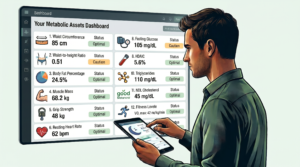
Just as a business tracks its finances, we should track our metabolic assets.
Important measures include:
- Waist circumference
- Waist-to-height ratio
- Body fat percentage
- Muscle mass
- Grip strength
- Resting heart rate
- Blood pressure
- Fasting glucose
- HbA1C
- Triglycerides
- HDL cholesterol
- Fitness levels
- Sleep quality
These measurements often reveal deterioration years before symptoms develop.
Think of them as your health bank statements.
Symptoms are often the final warning.
Biomarkers are the early warning system
Foundations First, Precision Second
Nutrition, movement, sleep and stress management remain the foundation of every health transformation.
Without these foundations, progress is difficult.
However, foundations alone may not explain why some people struggle despite doing everything correctly.
Two people may follow the same exercise programme.
One thrives.
The other makes little progress.
Why?
Sometimes hidden biological obstacles stand in the way.
These may include:
- Insulin resistance
- Thyroid dysfunction
- Nutrient deficiencies
- Low testosterone
- Chronic inflammation
- Iron deficiency
- Vitamin D deficiency
- Mitochondrial dysfunction
- Genetic variations affecting nutrient metabolism
- Medication-induced nutrient depletion
For example:
- Statins may reduce CoQ10 levels.
- Metformin may contribute to vitamin B12 deficiency.
- Certain genetic variants may increase requirements for specific nutrients.
Good foundations remain essential.
But understanding individual biochemistry can help ensure that effort translates into results.
The goal is not merely working harder.
The goal is to remove unnecessary barriers to success.
Social Capital Creates Health Capital
Humans rarely transform in isolation.
Health behaviours spread through communities.
Obesity spreads through social networks.
Smoking spreads through social networks.
Sedentary behaviour spreads through social networks.
The opposite is also true.
Exercise spreads.
Healthy eating spreads.
Optimism spreads.
Transformation spreads.
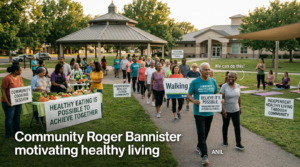
When one member of a community gains metabolic wealth, they become visible evidence that change is possible.
They become a living Roger Bannister.
One transformation inspires another.
Then another.
Then another.
Eventually, the community develops a new normal, not decline, but improvement.
This idea aligns beautifully with the Blue Zones research, where community support is one of the strongest predictors of long-term health.
Is It Ever Too Late?
One of the most encouraging findings in medicine is that meaningful improvements occur at every age.
People in their seventies, eighties, and even nineties can gain muscle.
Insulin sensitivity can improve.
Blood pressure can fall.
Physical function can increase.
Metabolic wealth may not look the same at eighty as it did at twenty-five.
But wealth is not measured against your younger self.
It is measured against your current position and future trajectory.
The goal is not perfection.
The goal is progress.
Every positive change moves the balance in the right direction.
Final Thoughts
The greatest threat to health is not ageing.
It is surrender.
The moment we believe decline is inevitable, we stop investing in ourselves.
Yet history repeatedly teaches us that human potential is larger than we imagine.
Roger Bannister did not merely run a mile in under four minutes.
He changed what people believed was possible.
Perhaps the future of metabolic health depends on creating thousands of similar examples.
People who show their families, friends and communities that health debt can become health wealth.
Not because ageing stops.
But because adaptation, recovery and improvement continue far longer than most people realise.
The best time to start building metabolic wealth is today.
Key Take-Home Summary
- Health is dynamic, not fixed.
- Disease does not prevent the accumulation of metabolic wealth.
- The “new normal trap” causes many people to miss early decline.
- Objective measurements are often more reliable than symptoms.
- Muscle, movement, nutrition, sleep, and stress management are the largest health deposits.
- Meaningful improvements can occur at any age.
- Progress matters more than perfection.
If you found this discussion useful, you may be interested in my recently published book, “Your Metabolic Shift”, which explores these concepts in greater depth.
Frequently Asked Questions (FAQ)
Can someone with type 2 diabetes build metabolic wealth?
Yes. Improved nutrition, increased muscle mass, weight loss, better sleep, and physical activity can substantially improve metabolic health even after diagnosis.
How can I tell if my health is declining before symptoms appear?
Track objective markers such as waist circumference, blood pressure, fasting glucose, HbA1c, fitness levels, and muscle strength.
Is ageing itself responsible for metabolic decline?
Age contributes, but lifestyle factors often play a much larger role than most people realise.
Is it possible to build muscle after age 60?
Yes. Numerous studies show that significant gains in muscle mass and strength are possible well into older age.
What is the most important first step?
Begin measuring. You cannot improve what you do not monitor.
This article is intended for educational purposes only and should not replace personalised medical advice. Readers with existing medical conditions should consult their healthcare professional before making significant dietary or lifestyle changes.
References
- The Landmark Nursing Home Strength Training Study
Fiatarone MA, Marks EC, Ryan ND, Meredith CN, Lipsitz LA, Evans WJ. High-Intensity Strength Training in Nonagenarians: Effects on Skeletal Muscle. New England Journal of Medicine. 1990;323(5):302-309. DOI: 10.1056/NEJM199008023230503
- Exercise as Medicine
Pedersen BK, Saltin B. Exercise as Medicine – Evidence for Prescribing Exercise as Therapy in 26 Different Chronic Diseases. Scandinavian Journal of Medicine & Science in Sports. 2015;25(Suppl 3):1-72. DOI: 10.1111/sms.12581
- Resistance Training and Healthy Ageing
Fragala MS, Cadore EL, Dorgo S, et al. Resistance Training for Older Adults: Position Statement From the National Strength and Conditioning Association. Journal of Strength and Conditioning Research. 2019;33(8):2019-2052. DOI: 10.1519/JSC.0000000000003230
- Physical Activity and Healthy Ageing
Paterson DH, Warburton DER. Physical Activity and Functional Limitations in Older Adults: A Systematic Review Related to Canada’s Physical Activity Guidelines. International Journal of Behavioural Nutrition and Physical Activity. 2010;7:38. DOI: 10.1186/1479-5868-7-38
- Sarcopenia and Ageing
Cruz-Jentoft AJ, Bahat G, Bauer J, et al. Sarcopenia: Revised European Consensus on Definition and Diagnosis. Age and Ageing. 2019;48(1):16-31. DOI: 10.1093/ageing/afy169
- Lifestyle Intervention and Reversal of Metabolic Disease
Knowler WC, Barrett-Connor E, Fowler SE, et al. Reduction in the Incidence of Type 2 Diabetes with Lifestyle Intervention or Metformin. New England Journal of Medicine. 2002;346(6):393-403.DOI: 10.1056/NEJMoa012512
- Behavioural Contagion and Social Networks
Christakis NA, Fowler JH. The Spread of Obesity in a Large Social Network over 32 Years.
New England Journal of Medicine. 2007;357(4):370-379. DOI: 10.1056/NEJMsa066082
- Blue Zones and Community Health
Buettner D. The Blue Zones: Lessons for Living Longer from the People Who’ve Lived the Longest.
Washington, DC: National Geographic Society; 2012. ISBN: 978-1426207556
- The Biology of Ageing Remains Plastic
López-Otín C, Blasco MA, Partridge L, Serrano M, Kroemer G. The Hallmarks of Ageing.
Cell. 2013;153(6):1194-1217. DOI: 10.1016/j.cell.2013.05.039
- Why Early Detection Matters
Petersen MC, Shulman GI. Mechanisms of Insulin Resistance and Implications for Metabolic Disease. Physiological Reviews. 2018;98(4):2133-2223. DOI: 10.1152/physrev.00063.2017