
Discover why muscle is your body’s most valuable metabolic asset. Learn how age, inactivity, insulin resistance, pain, body type and exercise choices affect muscle growth, and how to build muscle at any age using science-backed strategies.
Imagine waking up one morning and discovering that half the money in your bank account has quietly disappeared.
You would be concerned.
You would want to know how it happened.
You would want to stop the losses immediately.
Yet millions of people are losing something far more valuable every year without even noticing:
Their muscle mass.
Muscle is not simply something that helps us look athletic or lift heavy objects.
It is one of the most powerful organs for health, longevity and disease prevention.
In fact, muscle acts like a giant metabolic savings account. The more muscle you have, the greater your ability to handle carbohydrates, burn fat, regulate blood sugar, maintain energy, support brain function and remain physically independent.

Unfortunately, modern life has created what I call The Muscle Wealth Crisis.
- We sit more
- We move less
- We sleep less
- We eat more processed foods
We become insulin resistant.
Pain and stiffness discourage activity.
As a result, muscle slowly disappears while body fat accumulates.
The consequence is enormous. Muscle loss is associated with frailty, diabetes, cardiovascular disease, dementia, falls, fractures, disability and premature death.
The good news?
Muscle can be rebuilt at almost any age.
Muscle: Your Body’s Metabolic Engine
Most people think fat tissue determines metabolism. However, muscle plays a far bigger role.
Think of muscle as a giant sponge.
Every time you eat carbohydrates, glucose enters the bloodstream.
Healthy muscle absorbs much of this glucose and stores it safely as glycogen.
This reduces blood sugar spikes and lowers the demand for insulin.
Scientists often describe skeletal muscle as the body’s largest site for glucose disposal.
After a meal, approximately 70–80% of glucose uptake occurs in skeletal muscle.
This is why people with more muscle generally have better metabolic health.
I often tell patients:
Fat is a storage warehouse. Muscle is a power station.
The larger your power station, the more energy you can process efficiently.
Why So Many People Struggle to Build Muscle
Patients frequently ask:
“Doctor, I exercise but don’t seem to gain muscle.”
The answer is usually multifactorial.
- Age Reduces Protein Synthesis
From around age 30, adults naturally lose muscle mass.
After age 50, the rate often accelerates.
Scientists call this anabolic resistance.
Imagine trying to build a brick wall.
At age 25, every brick delivery arrives on time.
At age 65, the deliveries are slower and fewer workers are available.
The wall can still be built, but it requires more effort and better planning.
Older adults typically need:
- More dietary protein
- Resistance training
- Adequate restful sleep
- Higher-quality nutrition
To achieve the same muscle-building response.
- Physical Inactivity Switches Off Muscle Growth
Muscle follows a simple biological rule: Use it or lose it.
When muscles are challenged, the body invests in maintaining them.
When muscles are ignored, the body dismantles them.
From an evolutionary perspective, maintaining muscle is expensive.
Your body does not waste resources on tissue it believes is unnecessary.
This is why prolonged sitting, bed rest or sedentary lifestyles rapidly accelerate muscle loss.
- Sugar Burners versus Fat Burners
One of the most overlooked barriers to muscle growth is metabolic flexibility.
Many people become what I call sugar burners.
Their bodies depend heavily on frequent carbohydrate intake for energy.
Blood sugar rises.
Insulin rises.
Fat burning becomes restricted.
Energy fluctuates throughout the day.
These individuals often experience:
- Energy crashes
- Sugar cravings
- Brain fog
- Frequent hunger
- Difficulty losing fat
In contrast, fat burners can easily switch between glucose and stored body fat.
Think of a hybrid car.
A healthy metabolism can use electricity or petrol depending on conditions.
An unhealthy metabolism becomes stuck in burning sugar, raising insulin levels.
High insulin levels not only encourage fat storage but may also impair optimal muscle development by promoting chronic inflammation and metabolic dysfunction.
The goal is not to eliminate carbohydrates.
The goal is to restore metabolic flexibility.
- Pain: The Hidden Muscle Killer
Many patients with arthritis, tendon problems and chronic pain become trapped in a vicious cycle.
Pain causes inactivity.
Inactivity causes muscle loss.
Muscle loss increases joint stress.
Joint stress worsens pain.
And the cycle continues.
Consider the knee joint:
Strong quadriceps act like shock absorbers.
When these muscles weaken, more force is transferred directly into the joint.
The result is often worsening pain and disability.
The same principle applies to back pain and Shoulder problems.
Ironically, carefully supervised strength training is often one of the most effective treatments available.
Which Muscles Have the Greatest Metabolic Impact?
Not all muscles contribute equally.
The largest muscle groups create the biggest metabolic benefits.
These include:
Gluteal Muscles
The glutes are among the largest muscles in the body.
Strong glutes improve:
Insulin sensitivity,
Mobility and balance,
Athletic performance
Quadriceps
Located in the front of the thighs.
These muscles are critical for:
- Walking
- Climbing stairs
- Preventing falls
- Blood sugar control
The hamstrings, at the back of the thigh, are important for posture and movement efficiency.
Large back muscle groups contribute significantly to metabolic health and posture.
Strong core muscles improve movement, stability and injury prevention.
Think of these large muscles as major metabolic factories.
The larger the factory, the greater its impact on overall health.
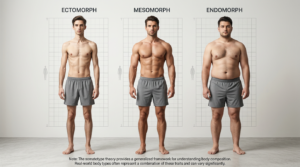
Does Body Type Influence Muscle Growth?
Absolutely.
Although everyone can build muscle, genetics influences how easily it occurs.
Traditionally, body types are classified into three broad categories.
Ectomorph
Naturally slim.
Often finds it difficult to gain weight or muscle.
May require:
- More protein
- Higher calorie intake
- Longer recovery
Mesomorph
Naturally athletic body structure.
Usually gains muscle relatively easily.
Endomorph
Typically, they gain weight more easily.
May build muscle well but often accumulates fat at the same time.
Body type influences the journey but does not determine the destination.
Consistent training and nutrition remain the dominant factors.
The Most Effective Exercises at Different Ages
In Your 20s and 30s
The focus should be on building a strong muscle reserve.
Effective strategies include:
- Progressive resistance training
- Squats
- Deadlifts
- Pull-ups
- Push-ups
- Sprint training
This is the time to invest heavily in Muscle Wealth.
In Your 40s and 50s
Muscle preservation becomes increasingly important.
Combine:
- Resistance training
- Mobility work
- Walking
- Adequate protein intake
Recovery becomes more important than it was in younger years.
In Your 60s, 70s and Beyond
Many people mistakenly believe muscle building is no longer possible.
Research shows the opposite.
Even individuals in their 80s and 90s can significantly increase strength and muscle mass.
Priorities include:
- Resistance bands
- Weight machines
- Bodyweight exercises
- Balance training
- Walking
The goal shifts from aesthetics
to longevity, independence and quality of life.
The Nursing Home Study: One of the Most Powerful Muscle Stories Ever Told
One of the landmark studies in ageing research was conducted by Maria Fiatarone Singh and colleagues at Tufts University.
The participants were nursing home residents with an average age of around 87 years. Many were frail, weak, dependent on walking aids, and considered too old to benefit significantly from exercise.
The researchers introduced high-intensity resistance training for just a few weeks.
The results were remarkable:
- Strength increased by over 100% in some participants.
- Walking speed improved significantly.
- Stair-climbing ability improved.
- Muscle size increased measurably.
- Several participants regained levels of function previously thought impossible.
This challenged the long-held belief that frailty in old age is irreversible.
Many people think ageing is like a candle burning down. Once the wax is gone, there is no way back. However, studies suggest that ageing is often more like a neglected garden. Even after years of decline, remarkable recovery can occur when the right conditions are restored.
The message becomes: “It is never too late to invest in Muscle Wealth.”
The Forgotten Role of Protein
Building muscle without adequate protein is like trying to build a house without bricks. Most adults seeking to improve muscle mass benefit from spreading protein intake throughout the day. Protein becomes increasingly important with ageing due to anabolic resistance.
Muscle proteins contain all twenty amino acids.
Protein provides the amino acids required for repair and growth.
The challenge is obtaining enough of certain essential amino acids, particularly:
Leucine is the master switch for muscle protein synthesis.
Isoleucine supports energy metabolism and muscle recovery.
Valine supports muscle repair and endurance.
Together, these are known as the Branched-Chain Amino Acids (BCAAs), with leucine playing a disproportionately important role in stimulating muscle growth.
Think of leucine as the foreman who tells the construction workers to start building.
Without enough leucine, muscle growth signals are weaker.
Should We Focus on Proteins Rich in Leucine?
Excellent Leucine Sources
Animal Sources
- Eggs
- Fish
- Chicken
- Turkey
- Beef
- Greek yoghurt
- Cottage cheese
- Whey protein
Whey is particularly rich in leucine and is often considered the gold standard for stimulating muscle protein synthesis, if you are not milk or dairy sensitive.
Vegetarian Sources
- Soy products
- Tempeh
- Tofu
- Edamame
- Lentils
- Chickpeas
- Beans
- Quinoa
These foods can support muscle growth but often require larger quantities to reach the leucine threshold. Vegetarians and vegans can build muscle without additional support.
Should Older Adults Consider Leucine Supplements?
Possibly.
Because of anabolic resistance, older adults often require a stronger muscle-building signal.
Research suggests that:
- Protein quality becomes increasingly important with age.
- Leucine-rich protein sources may be beneficial.
- Whey protein or essential amino acid supplements may help some older adults achieve optimal protein synthesis.
However, I would emphasise: Food first, supplements second.
Supplements should fill gaps rather than replace a nutrient-dense diet.
Muscle: The Organ of Longevity
Perhaps the most important message is this:
Muscle is not merely cosmetic tissue.
It functions as an endocrine organ, producing signalling molecules called myokines.
These compounds influence:
- Brain health
- Immune function
- Inflammation
- Cardiovascular health
- Metabolic regulation
Emerging research suggests muscle health may play a role in reducing the risk of dementia, diabetes, cancer and frailty.
In many ways, muscle acts as the body’s health insurance policy.
The earlier you invest, the greater the returns.

The Calf Muscle: The Forgotten Second Heart
The calf muscles act as a powerful venous pump.
Every time we walk:
- Calf muscles contract.
- Veins are squeezed.
- Blood is pushed back toward the heart.
- Venous congestion is reduced.
Some vascular specialists refer to the calf as “The Second Heart.”
“Imagine carrying buckets of blood uphill from your feet to your heart all day long. Your calf muscles are the workers doing the lifting.”
Weak calf muscles contribute to:
- Poor circulation
- Leg swelling
- Varicose veins
- Reduced exercise tolerance
- Reduced mobility
Stronger calf muscles improve:
- Walking endurance
- Venous return
- Cardiovascular efficiency
- Balance
- Fall prevention
The Calf-Raise Longevity Test
“Can you perform 20–30 controlled calf raises while holding a chair for balance?”
Inability may indicate a loss of lower-limb strength and a reduced mobility reserve.
Summary
The Muscle Wealth Crisis is one of the most under-recognised health challenges of modern society.
Muscle serves as a powerful metabolic sink, helping regulate blood sugar, insulin sensitivity and energy production.
Ageing, inactivity, insulin resistance, chronic pain and poor nutrition all contribute to muscle loss.
However, muscle remains remarkably responsive to lifestyle interventions throughout life.
The foundations are simple:
- Resistance training
- Adequate protein
- Good sleep
- Daily movement
- Metabolic flexibility
- Pain management
Building muscle is not about becoming a bodybuilder.
It is about creating the physical and metabolic reserve needed to enjoy life, maintain independence and reduce the risk of chronic disease.
If you found this discussion useful, you may be interested in my recently published book, “Your Metabolic Shift”, which explores these concepts in greater depth.
Frequently Asked Questions
Can I build muscle after age 60?
Yes. Research consistently demonstrates that older adults can significantly improve muscle mass and strength through resistance training and adequate protein intake.
Is walking enough to build muscle?
Walking is excellent for cardiovascular and metabolic health but is usually insufficient for significant muscle growth. Resistance training is generally required.
How much protein do older adults need?
Many experts recommend higher protein intakes than the minimum recommended daily allowance, particularly when aiming to maintain or build muscle.
Does muscle help with diabetes prevention?
Yes. Skeletal muscle is the primary site of glucose disposal after meals and plays a major role in maintaining healthy blood sugar control.
Can patients with arthritis safely perform strength training?
In most cases, yes. Appropriately prescribed strength training often improves symptoms and function. Medical guidance may be necessary for specific conditions.
Which exercise provides the greatest metabolic benefit?
Compound exercises involving large muscle groups, such as squats, lunges, rowing movements, and resistance training for the legs and back, typically produce the largest metabolic response.
Closing Thoughts
“When people think about muscle, they often picture athletes, bodybuilders or gym enthusiasts. Yet one of the most important muscle studies ever performed took place not in a gym but in a nursing home. Frail individuals in their late eighties regained strength, mobility and independence once their muscles were challenged to grow again.
Muscle is not about appearance.
It is about freedom.
Freedom to walk, to climb stairs, to travel and to live independently.
In many ways, Muscle Wealth is Independence Wealth.”
Unlike financial wealth, muscle wealth protects nearly every aspect of health simultaneously.
It supports energy, mobility, independence, resilience and longevity.
The tragedy is not that we grow older.
The tragedy is allowing muscle to disappear while believing that decline is inevitable.
The evidence tells a different story.
Whether you are 35, 55 or 85, your muscles are still listening.
The question is: What message are you sending them today?
This article is intended for educational purposes only and should not replace personalised medical advice. Readers with existing medical conditions should consult their healthcare professional before making significant dietary or lifestyle changes.
References
- Wolfe RR. The underappreciated role of muscle in health and disease. American Journal of Clinical Nutrition. 2006;84(3):475–482.
- Cruz-Jentoft AJ, et al. Sarcopenia: revised European consensus on definition and diagnosis. Age and Ageing. 2019;48(1):16–31.
- Wilkinson DJ, et al. Age-related anabolic resistance and strategies to maintain muscle mass. Nutrients. 2018;10(9):E1183.
- Pedersen BK, Febbraio MA. Muscles, exercise and obesity: skeletal muscle as a secretory organ. Nature Reviews Endocrinology. 2012;8:457–465.
- Phillips SM, et al. Protein requirements and ageing. Applied Physiology, Nutrition, and Metabolism. 2016;41(5):565–572.
- Frontera WR, et al. Strength conditioning in older adults. Journal of Applied Physiology. 1988;64(3):1038–1044.
- McLeod JC, et al. Resistance exercise as medicine. Sports Medicine. 2019;49(10):1459–1468.
- Booth FW, Roberts CK, Laye MJ. Lack of exercise is a major cause of chronic diseases. Comprehensive Physiology. 2012;2(2):1143–1211.
- DeFronzo RA, Tripathy D. Skeletal muscle insulin resistance and metabolic syndrome. Clinical Cornerstone. 2003;5(2):13–28.
- Westcott WL. Resistance training is medicine. Current Sports Medicine Reports. 2012;11(4):209–216.