Why surviving longer isn’t enough, and how to build the strength, energy, independence, and purpose to enjoy the years ahead.
Imagine reaching retirement with a comfortable pension, a beautiful home, and decades of freedom ahead, only to discover your body can no longer enjoy them.
You have saved for retirement, but have you saved enough health?
That may be modern longevity’s greatest oversight.
We have become remarkably successful at keeping people alive. We have sophisticated hospitals, powerful medicines, advanced imaging and increasingly intelligent technologies. Yet many people reach retirement carrying several chronic conditions, taking multiple medications and gradually losing physical capacity.
We have created a society that prepares people financially for retirement but often leaves them physically, mentally, and socially unprepared.
This is the paradox I want to explore, building on the ideas in my book, Your Metabolic Shift.
The solution requires a fundamental shift in thinking.
We must stop treating health as simply the absence of disease and start treating it as something we actively create, strengthen and enjoy.
 The baby boomers: A great medical success, but an unfinished health revolution
The story begins with an extraordinary British scientific project.
In March 1946, researchers began following thousands of babies born across Britain. The Medical Research Council’s National Survey of Health and Development would become one of the world’s longest-running birth cohort studies.
These children grew up with the NHS, antibiotics, expanding education, improving living standards and remarkable advances in medicine.
Surely, by retirement, this generation would be healthier than any before it?
The results were more complicated and, in an important sense, disappointing.
A study of 2,661 cohort members aged 60–64 documented the widespread presence of clinical disorders requiring treatment or monitoring. Later research found that the average number of assessed conditions increased from approximately 0.7 at age 36 to 3.7 at age 69. These findings describe the studied cohort, not every British retiree.
Obesity, hypertension, diabetes and other metabolic problems had become familiar companions of later adulthood.
The lesson was not that modern medicine had failed. It had achieved extraordinary things.
The disappointment was that longer survival had not automatically produced the active, vigorous retirement we might have expected.
This raises a provocative question:
What if we have invested too heavily in treating the consequences of unhealthy living, and too little in creating the conditions for healthy living?
Baby boomers versus Blue Zoners: Two different ways of growing old
The modern retirement pattern
Convenience, prolonged sitting, scheduled exercise and increasingly medicalised later life.
The Blue Zone inspiration
Daily movement, familiar foods, close relationships and meaningful community roles.
Consider the communities associated with exceptional longevity in Sardinia, Okinawa, Ikaria and other so-called Blue Zones.
Their traditional lifestyles stand in striking contrast to sedentary retirement.
Many older residents keep walking, gardening, cooking, participating in family life, and maintaining close social relationships.
They do not necessarily regard physical activity as a separate appointment. Movement is embedded in daily life.
Their diets vary considerably, but traditional patterns commonly emphasise minimally processed foods, vegetables, legumes and locally available ingredients.
They also demonstrate something that modern longevity medicine sometimes overlooks: belonging.
There is an important scientific qualification. Researchers have debated the accuracy and interpretation of exceptional longevity records and have published both criticisms and detailed defences of age-validation methods. The Blue Zones should therefore be treated as useful sources of hypotheses and practical inspiration, not proof of a universal longevity formula.
The most valuable lesson is not to copy an Okinawan menu or a Sardinian lifestyle exactly.
Recognise that healthy living becomes easier when the surrounding environment makes movement, nourishing food, connection, and purpose part of ordinary life.
Stop counting diseases. Start measuring health.
Imagine maintaining a beautiful house.
You wouldn’t wait until the roof collapsed to repair it. You would inspect the foundations, maintain the heating, protect the structure and keep everything functioning.
Your body deserves similar attention.
After 50, the central questions should become:
Can I walk comfortably for an hour? Can I climb stairs without undue breathlessness? Can I carry shopping, get up from the floor and maintain my balance? Am I sleeping well? Do I wake with energy? Do I have people to share life with?
These questions measure something more meaningful than a disease label.
They measure health capacity: the ability to do what matters to you.
A person with well-managed hypertension may be active, socially connected and enjoying life. Another person with no formal diagnosis may be isolated, physically weak and struggling with everyday tasks.
Health is therefore more than a collection of normal laboratory results.
It is physical capability, mental resilience, social participation and the freedom to pursue meaningful goals.
The highest-value habits: Simple enough to practise, powerful enough to matter
We do not need twenty complicated longevity rules. We need a few habits that deliver value repeatedly.
Move every day.
Walk to the shops, take the stairs, garden, dance or hike. Build towards at least 150 minutes of moderate aerobic activity weekly, adapted to your ability. Use the talk test: moderate effort generally allows conversation, but not comfortable singing.
Keep your muscles working.
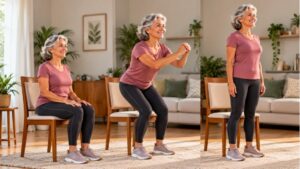
Practise chair rises, resistance-band exercises, or weights twice a week. Add safe balance exercises. Muscle is your independence reserve, and its metabolic role extends far beyond movement.
Eat food that works for your body.
Prioritise minimally processed foods, sufficient protein, fibre and healthy fats. Reduce sugary drinks and excessive refined carbohydrates. Avoid treating one diet as universally superior.
Respect sleep and recovery.
Maintain a regular sleep schedule, seek morning daylight and investigate persistent sleep disturbances. Rest is not wasted time; it enables adaptation and restoration.

Stay connected and useful.
Join a group, volunteer, learn, mentor or spend meaningful time with family. Social connection is not a luxury added to physical health. It is part of health itself.
The NHS recommends daily activity for older adults, including regular strength, balance and flexibility work. Those with medical concerns or prolonged inactivity should seek appropriate advice before substantially increasing exercise intensity.
Personalised health: Why one diet or exercise programme cannot fit everyone
Here is where the modern wellness industry often gets things wrong.
One influencer insists everyone should eat very low carbohydrate. Another promotes a plant-based diet. Someone else claims fasting is essential for longevity.
But human beings are not identical machines.
A physically active 55-year-old with normal glucose regulation may tolerate carbohydrate-rich whole foods extremely well.
A 65-year-old with type 2 diabetes may benefit from reducing carbohydrate intake, particularly refined carbohydrates, while monitoring medication requirements.
A frail 80-year-old with poor appetite and muscle loss may need more attention to adequate energy and protein than to restrictive dieting.
All three need good nutrition. They do not necessarily need the same menu.
The same applies to exercise.
Someone with years of hiking experience may enjoy steep mountain trails. Someone recovering from surgery may start with five-minute walks and supervised strengthening.
The best lifestyle programme is not the most extreme. It is the one that is safe, effective, enjoyable and sustainable for the individual.
Personalisation should consider medical conditions, medication, physical capacity, preferences, culture, finances and access to suitable activities.
Alcohol: The uncomfortable conversation ageing societies must have
Alcohol deserves more attention in any serious longevity discussion.
People often associate it with relaxation, celebration, and social connection. Yet alcohol can interfere with sleep, increase fall risk, interact with medication and contribute to long-term health problems.
The 2024 Health Survey for England found that 29% of adults aged 65–74 drank more than 14 units per week, the highest proportion among the age groups surveyed.
NHS England Digital
Current NHS guidance does not support the old idea that a daily glass of wine is necessary for a healthy heart.
The UK Chief Medical Officers recommend that people who drink should not regularly exceed 14 units weekly, while emphasising that lower consumption carries lower risk. Not drinking is a sound choice for longevity.
A practical experiment is to record alcohol intake and sleep quality for a fortnight, then try an alcohol-free period and observe the difference.
Socialising does not require alcohol. Walking clubs, shared meals, music and community activities can provide connection without it.
People who may be alcohol-dependent should seek medical advice before abruptly stopping, because withdrawal can be dangerous.
Google, social media and AI: Helpful assistants or dangerous health advisers?
We now live in a world where almost anyone can obtain a personalised-sounding health plan within seconds.
Google can locate useful information. Social media can inspire activity and connect people. AI can explain complex scientific concepts, organise records and suggest questions for a healthcare professional.
These technologies have genuine potential.
But a danger remains: information that sounds personalised is not necessarily medically personalised.
An AI system may recommend a high-protein diet without knowing someone has advanced kidney disease. A fitness influencer may promote intense interval training without considering a viewer’s cardiac symptoms or exercise tolerance.
Social media algorithms are designed partly to sustain attention. Dramatic promises and extreme transformations can spread faster than careful scientific explanations.
Use digital technology as a navigator, not an unquestioned authority.
Before following advice, ask who produced it, what evidence supports it, whether commercial interests are involved, and whether it suits your circumstances.
Never share unnecessary identifiable medical information with public AI services. And do not change prescribed medication based on generic AI advice.
The most promising future is a partnership between informed individuals, trustworthy digital tools and qualified professionals.

The retirement revolution should begin in our communities
Imagine a different model of retirement.
Instead of leaving employment and gradually withdrawing from activity, people join local health-creation groups.
They walk together, share healthy meals, learn strength exercises, compare progress, support neighbours and organise activities for different physical abilities.
The NHS could support such programmes through appropriate assessment, rehabilitation, social prescribing and referrals. Community organisations could provide the relationships, venues and regular activities that clinical services cannot deliver alone.
This would not eliminate disease or replace medical care.
It would make creating health a shared social activity rather than a private struggle.
Perhaps the most important lesson from the Blue Zones is that health depends not only on individual behaviour but also on the communities in which people live.
If you found this discussion useful, you may be interested in my recently published book, “Your Metabolic Shift”, which explores these concepts in greater depth.
Frequently asked questions
Can I become fitter after 70?
Yes. Many older adults improve strength, balance and endurance with appropriately designed training. The programme must match their capacity and health circumstances.
Should everyone follow a low-carbohydrate diet?
No. Reducing refined carbohydrates is generally sensible, but ideal carbohydrate intake varies with metabolic health, activity, medication, and personal preferences.
Is walking enough?
Walking is an excellent foundation, but strength and balance training add important benefits, particularly for maintaining independence.
Should I buy a smartwatch or biological-age test?
A smartwatch can help track activity trends, but it is optional. Commercial biological-age tests lack sufficient clinical utility to be essential for routine longevity planning.
What if I already have several chronic conditions?
Health creation remains worthwhile. Work with your clinical team to identify safe activities, appropriate nutrition and realistic goals. Having a diagnosis does not remove the possibility of improving capability or wellbeing.
How can I tell whether my health programme is working?
Look for improvements in comfortable walking, strength, sleep, energy, confidence, relationships and enjoyment of daily life, not just weight or laboratory numbers.
Conclusion: Don’t simply retire. Reinvent the way you live.
The baby boomers have given us an important warning. Medical progress and longer life do not automatically guarantee a healthy, satisfying retirement.
The Blue Zones offer a different perspective: a life where movement, food, relationships, and purpose are naturally connected.
And modern science gives us the tools to combine these lessons with individual assessment and safer, more personalised choices.
We do not need to live like our grandparents. Nor do we need to surrender our later years to inactivity or endless medical appointments.
We need a new ambition to stay strong enough to explore, curious enough to learn, connected enough to belong, and independent enough to enjoy the opportunities longer life provides.
The greatest retirement mistake is waiting until retirement to start creating the health you will need to enjoy it.
So, ask yourself today: What do I want to be able to do at 70, 80 or 90, and what am I doing now to make that possible?
In the next articles, we will explore how to build a personalised longevity plan, measure physical and mental capacity, and help individuals, families, and communities turn healthy ageing from an aspiration into everyday practice.
Don’t just add years to your life. Start creating the health to live them.
This article is intended for educational purposes only and should not replace personalised medical advice. Readers with existing medical conditions should consult their healthcare professional before making significant dietary or lifestyle changes.
References
- Pierce MB, Silverwood RJ, Nitsch D, et al. (2012). Clinical disorders in a post-war British cohort reaching retirement: Evidence from the First National Birth Cohort study. PLoS ONE, 7(9), e44857.
- Gondek D, Bann D, Patalay P, et al. (2021). Socioeconomic inequalities in prevalence and development of multimorbidity across adulthood: A longitudinal analysis of the MRC 1946 National Survey of Health and Development in the UK. PLoS Medicine, 18(9), e1003775.
- Bull FC, Al-Ansari SS, Biddle S, et al. (2020). World Health Organisation 2020 guidelines on physical activity and sedentary behaviour. British Journal of Sports Medicine, 54, 1451–1462.
- UK Chief Medical Officers. (2019). UK Chief Medical Officers’ Physical Activity Guidelines. Department of Health and Social Care.
- Bauer J, Biolo G, Cederholm T, et al. (2013). Evidence-based recommendations for optimal dietary protein intake in older people. Journal of the American Medical Directors Association, 14, 542–559.
- Sherrington C, Fairhall NJ, Wallbank GK, et al. (2019). Exercise for preventing falls in older people living in the community. Cochrane Database of Systematic Reviews, CD012424.
- NHS England Digital. (2026). Health Survey for England 2024: Adults’ health-related behaviours..
- National Institute for Health and Care Excellence. (NG136). Hypertension in adults: Diagnosis and management.
- Office for National Statistics. Personal well-being survey user guidance.
- Centres for Disease Control and Prevention. STEADI: Clinical resources and functional assessments.
- World Health Organisation. (2015). World Report on Ageing and Health. Geneva: WHO.
- Livingston G, Huntley J, Liu KY, et al. (2024). Dementia prevention, intervention, and care: 2024 report of the Lancet Standing Commission. The Lancet, 404, 572–628.
- Poulain M, Herm A, Pes GM, et al. (2025). The validity of Blue Zones demography: A response to critiques.
- UK Department of Health and Social Care. Clinical guidelines for alcohol treatment: Primary care and community health services.