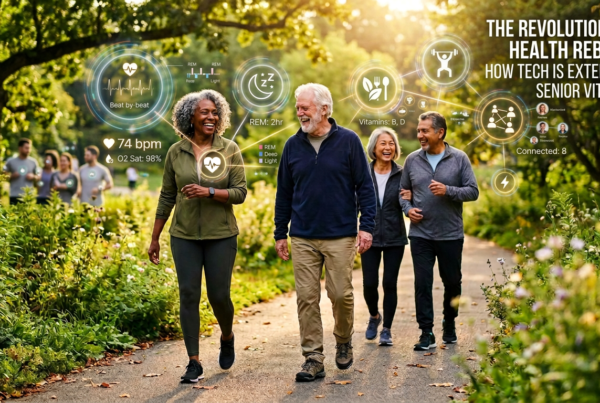
Discover how homeostatic capacity helps your body adapt to exercise, stress, heat, hydration and altitude and why this adaptability changes with age.
A 25-year-old wakes to an alarm, jumps out of bed, pulls on running shoes and is out the door within minutes.
At 75, the same transition may look rather different. Sitting up first feels sensible. Standing requires a moment. Balance needs to settle. The first few steps are deliberate. Only then does movement become effortless.
Nothing dramatic has happened. Yet beneath the surface, dozens of physiological systems have just been tested.
When we stand, gravity suddenly pulls blood towards the legs. Blood pressure sensors detect the change. The brain responds. The sympathetic nervous system adjusts heart rate and vascular tone. Muscles make tiny postural corrections. The vestibular system establishes where the head is in space. The brain must maintain blood flow.
The young body often performs this orchestration almost invisibly. With ageing, some of these adjustments may become slower, smaller or less precisely coordinated. Baroreflex sensitivity and heart-rate variability tend to decline with age, while autonomic regulation changes.
This points to an aspect of ageing that receives far less attention than cholesterol, blood pressure or glucose:

How effectively can the body keep itself stable while everything around it and inside it is changing?
That ability is homeostasis.
And perhaps an even more useful concept is homeostatic capacity: how rapidly, accurately and economically our physiological systems can respond when equilibrium is disturbed.
Your Body Is Not Trying to Keep Everything Constant
Homeostasis is sometimes described as maintaining a constant internal environment.
That is slightly misleading.
Your physiology is continuously moving.
Heart rate changes from beat to beat. Blood pressure fluctuates. Glucose rises and falls. Body temperature follows a circadian rhythm. Hormones pulse. Breathing changes from second to second.
Health is therefore not physiological stillness.
Think instead of a skilled pilot flying through turbulent air.
The aircraft is constantly drifting from its desired trajectory. Sensors detect those deviations. Control systems interpret them. Corrections are made sometimes before passengers even notice.
The objective is not to eliminate movement but to maintain stability through movement.
This requires sensors, a control centre and effectors.
Chemoreceptors monitor oxygen, carbon dioxide and acidity. Osmoreceptors monitor body fluid concentration. Baroreceptors monitor pressure. Thermoreceptors monitor temperature.
The brain, particularly the hypothalamus and brainstem, integrates much of this information, although regulation is distributed throughout the nervous and endocrine systems.
Then the heart, blood vessels, lungs, kidneys, liver, endocrine glands, muscles and skin make the necessary adjustments.
Homeostasis is therefore not an organ.
It is a conversation between organs.
Ageing May Change the Conversation
One intriguing theory of physiological ageing is the loss of complexity.
Young healthy physiological systems display surprisingly complex fluctuations. Heartbeats, blood pressure, breathing and even postural sway are not perfectly regular. Their variability contains information because multiple regulatory networks interact continuously.
Ageing and disease can reduce this complexity, potentially narrowing the range of responses available when the body encounters a challenge.
Imagine a young orchestra whose musicians can instantly change tempo, volume and style.
Now imagine an orchestra in which each musician can still play but communication between sections has become slower.
The problem is not necessarily that any one instrument has failed.
Coordination has become less agile.
The ageing brain is part of this story. Central autonomic networks involving the brainstem, hypothalamus, insula and other regions help regulate cardiovascular, endocrine, thermal and visceral responses. Age-related changes occur both centrally and within peripheral autonomic pathways.
But ageing does not occur in isolation from behaviour.
Physical activity repeatedly asks these systems to adjust. Exercise challenges circulation, temperature regulation, glucose availability, oxygen delivery, acid-base balance and fluid regulation. Training therefore repeatedly exposes the body to controlled disturbances it must adapt to.
This may partly explain the extraordinary physiology seen in some Masters athletes.

How Can a 95-Year-Old Still Break Records?
Occasionally we hear about someone in their 90s producing an extraordinary athletic performance.
Does that contradict biological ageing? No.
Masters-athlete data show unmistakable age-related declines in maximal performance, particularly at advanced ages. Yet performances among older athletes have also improved substantially over successive generations.
That distinction matters.
Age sets biological constraints; it does not prescribe an individual’s exact position within them.
Genetics, lifelong training, muscle mass, cardiovascular fitness, technique, nutrition, disease burden, motivation and continued participation all influence where someone sits within the enormous distribution of human ageing.
Fitness can even mitigate some age-related limitations in thermoregulation. Highly active older people generally tolerate exercise and heat better than sedentary peers, although age-related physiological differences remain.
A 95-year-old record holder is therefore not evidence that ageing has disappeared.
He or she demonstrates how much functional capacity can sometimes remain inside an ageing biological system.
HRV: Listening to the Control System
Heart-rate variability (HRV) provides a fascinating window into this regulatory world.
If your heart beats 60 times per minute, it does not normally beat exactly once every second.
One interval might be 0.92 seconds, another 1.05, another 0.97.
That variability reflects, among other influences, the continual interaction between sympathetic and parasympathetic autonomic control.
Counterintuitively, a perfectly metronomic heart is not necessarily the sign of a highly adaptable system.
Appropriate variability provides room to manoeuvre.
Average HRV tends to decrease with ageing, although fitness, disease, medication, sleep, stress and measurement conditions all matter. HRV should therefore not be treated as a single number “health score.”
Sleep illustrates this beautifully. A recent meta-analysis found sleep deprivation associated with reductions in RMSSD, a commonly used HRV measure related to vagal modulation, alongside other changes consistent with altered autonomic regulation.
So HRV is perhaps best imagined not as the fuel gauge, but as one imperfect microphone listening to the conversation between regulatory systems.

Why Don’t I Need to Urinate When Running?
Here is homeostasis in everyday life.
You drink water during a long run, yet instead of needing the toilet repeatedly, much of that water seems to disappear.
Where did it go?
Exercise changes the body’s priorities.
Blood is redirected to working muscles and, especially in heat, to the skin. Renal blood flow can decrease. At higher exercise intensities, urine flow and sodium excretion may fall while hormones including arginine vasopressin, also called antidiuretic hormone (ADH), aldosterone and renin increase.
Meanwhile, the body loses water through sweat and respiration.
ADH helps the kidneys conserve water. Aldosterone promotes sodium retention, with water tending to follow sodium. Thirst and osmoreceptors provide another layer of control.
Think of the kidneys as highly sophisticated water-treatment plants receiving instructions from central command.
During exercise, the message may effectively become: “Water is valuable. Conserve it.”
Ageing complicates this system. Thirst sensation can diminish, renal concentrating capacity declines, and water handling changes. Importantly, however, recent research cautions against assuming that every older adult responds identically; hydration behaviour during exercise and heat is more nuanced than the traditional “older people simply don’t feel thirst” narrative suggests.
Temperature: Another Invisible Control Loop
Start running, and muscle metabolism produces heat.
Yet core temperature usually remains within a surprisingly narrow workable range.
Thermoreceptors detect temperature changes. The hypothalamus integrates the information. Skin blood vessels dilate. Sweat production increases. Evaporation removes heat.
Again, ageing can alter the response.
Older adults, on average, show reductions in sweating and cutaneous vasodilation and may have less effective cardiovascular adjustments during heat exposure. Fitness and acclimatisation can preserve much of that capacity.
The important point is that homeostasis is trainable but not infinitely so.
Altitude: A Natural Experiment in Homeostasis
Take the same person from sea level to 3,000 metres and another regulatory challenge begins.
Oxygen availability falls.
Chemoreceptors detect the disturbance. Ventilation increases almost immediately. Heart rate and cardiac output initially rise. Carbon dioxide falls, producing respiratory alkalosis. The kidneys subsequently adjust bicarbonate handling. Plasma volume contracts. Over longer periods, erythropoietin stimulates increased red-cell production.
Different systems adapt on different timescales from seconds to weeks.
Altitude therefore gives us a beautiful mental picture of homeostasis:
The body does not possess one adaptation switch. It has layers of control systems that hand the problem from one to another over time.
Stress Works the Same Way
The principle extends beyond exercise and altitude.
Imagine giving a presentation for the first time.
Heart rate rises. Adrenaline and noradrenaline increase. Cortisol may rise. Attention sharpens.
Repeat the same challenge many times and something interesting can happen.
The response may become smaller.
A 2025 systematic review and meta-analysis found substantial habituation of HPA-axis responses to repeated psychosocial stress, although autonomic and immune responses were less consistently habituated.
Experience can therefore teach the physiological alarm system that a familiar challenge does not require the same response.
This does not mean we possess a finite “adrenaline reserve” that gets used up.
A better analogy is an alarm system whose sensitivity and response are continually calibrated.
And this is where psychology enters physiology.
Confidence, expectation and self-efficacy can influence whether people undertake physical challenges and persist with them. In older adults, self-efficacy is closely linked to physical activity and functional performance.
That does not mean positive thinking can override biology.
It means behaviour and biology form a feedback loop:
I believe I can → I attempt → I adapt → my capacity improves → my confidence increases → I attempt more.
The reverse loop can also occur.
Homeostasis, Not Haemostasis
One terminology distinction is worth making.
Homeostasis describes the regulation of the body’s internal environment.
Haemostasis specifically describes the control of bleeding.
Haemostasis itself involves several tightly coordinated processes: the injured blood vessel responds; platelets adhere and aggregate to create the initial plug; the coagulation system generates fibrin to stabilise it; anticoagulant mechanisms limit clot formation; and fibrinolysis eventually helps remove the clot.
It is, appropriately enough, another beautiful example of homeostatic regulation: too little clotting causes bleeding; too much causes thrombosis.

The Bigger Picture
Glucose regulation. Blood pressure. Temperature. Oxygen. Carbon dioxide. pH. Sodium. Water. Energy availability. Posture. Stress.
Every minute of every day, thousands of adjustments are occurring without conscious instruction.
And perhaps this gives us a richer way of thinking about ageing.
Ageing is not simply the accumulation of damaged parts.
It may also involve a gradual reduction in the speed, range, precision and coordination with which the whole organism responds to change.
Modern research increasingly describes ageing in terms of declining adaptive homeostasis, physiological dysregulation and loss of physiological complexity.
This brings us directly back to metabolic reserve.
Reserve asks: How much capacity remains?
Homeostatic capacity asks: How effectively can that capacity be deployed when circumstances change?
And soon we will need to ask an even larger question:
What determines how much physiological capacity we accumulate, preserve and ultimately carry into later life?
That is where the idea of Vitality Capital begins.
If you found this discussion useful, you may be interested in my recently published book, “Your Metabolic Shift”, which explores these concepts in greater depth.
Frequently Asked Questions (FAQ)
Can exercise preserve homeostatic capacity?
It can preserve and improve many components of physiological regulation, including cardiovascular, metabolic and thermoregulatory function. It cannot abolish ageing, but habitual activity can substantially influence functional capacity.
Is high HRV always better?
No. HRV depends on age, fitness, breathing, sleep, medication, disease and measurement conditions. Certain abnormal rhythms can also produce high variability. Trends measured under consistent conditions are generally more informative than comparing one number between individuals.
Why can standing suddenly cause dizziness in older people?
Standing shifts blood towards the lower body. The baroreflex normally responds rapidly by adjusting heart rate and vascular resistance. Ageing, disease, medications, dehydration and deconditioning can impair this response.
Does drinking more water always improve hydration during exercise?
No. Requirements vary with body size, exercise intensity, duration, temperature, sweating and diet. Excessive water intake can also be harmful if it produces exercise-associated hyponatraemia. A young athlete died in the London Marathon because of this a few years ago.
Does the brain control homeostasis?
It is a major coordinator, particularly through the hypothalamus, brainstem and autonomic networks, but homeostasis is distributed across the entire organism. The kidneys, liver, heart, lungs, blood vessels, endocrine organs, muscles, and individual cells all participate.
Can we train homeostasis?
To a degree. Exercise training, heat acclimation, altitude acclimatisation and repeated exposure to certain stressors demonstrate that physiological control systems can adapt. The magnitude of adaptation varies between individuals and generally changes with ageing.
The Take-Home Message
Perhaps youth is not simply having stronger muscles, a faster heart or more energy.
Part of youth may be possessing a physiological network with more room to manoeuvre.
Stand up: the circulation adjusts.
Start running: the cardiovascular and metabolic systems respond.
Become hot—the skin and sweat glands react.
Lose water—the kidneys conserve it.
Climb a mountain—the lungs, heart, kidneys and blood begin negotiating a new solution.
Encounter a familiar challenge—the brain learns that the alarm need not ring quite so loudly.
The remarkable thing about the human body is that it doesn’t remain constant.
It changes continuously to keep us stable.
And perhaps one of the most important questions in longevity is not simply how much physiological reserve you have.
It is: How much change can your body still handle, and how elegantly can it respond?
This article is intended for educational purposes only and should not replace personalised medical advice. Readers with existing medical conditions should consult their healthcare professional before making significant dietary or lifestyle changes.
References
Barthel MC, Fricke K, Muehlhan M, Vogel S, Alexander N. Habituation of the biological response to repeated psychosocial stress: a systematic review and meta-analysis. Neurosci Biobehav Rev. 2025;169:105996. doi:10.1016/j.neubiorev.2024.105996.
Bourdillon N, Millet GP. From adaptation to maladaptation: regulatory reserve and ventilatory control responses to high altitude. 2026.
Davies KJA. The role of declining adaptive homeostasis in ageing. J Physiol. 2016/2018 literature.
Lipsitz LA. Physiological complexity, aging, and the path to frailty. Sci Aging Knowledge Environ. 2004;2004(16). doi:10.1126/sageke.2004.16.pe16.
Manor B, Lipsitz LA. Physiologic complexity and aging: implications for physical function and rehabilitation. Prog Neuropsychopharmacol Biol Psychiatry. 2013.
Mortimer T, Smith JG, Muñoz-Cánoves P, et al. Circadian clock communication during homeostasis and ageing. Nat Rev Mol Cell Biol. 2025;26:314–331.
Olivieri F, Biscetti L, Pimpini L, et al. Heart rate variability and autonomic nervous system imbalance: potential biomarkers and detectable hallmarks of aging and inflammaging. Ageing Res Rev. 2024;101:102521. doi:10.1016/j.arr.2024.102521.
Parashar R, Amir M, Pakhare A, et al. Age-related changes in autonomic cardiovascular control: meta-analytic evidence.
Tanaka H, Seals DR. Endurance exercise performance in Masters athletes: age-associated changes and underlying physiological mechanisms. J Physiol. 2008;586:55–63.
Balmain BN, Sabapathy S, Louis M, Morris NR. Ageing and thermoregulatory control: the clinical implications of exercising under heat stress in older individuals. Biomed Res Int. 2018;2018:8306154. doi:10.1155/2018/8306154.
Zhang et al. Effects of sleep deprivation on heart rate variability: a systematic review and meta-analysis. 2025.
Stassen JM, Arnout J, Deckmyn H. The hemostatic system. Curr Med Chem. 2004;11(17):2245–2260. doi:10.2174/0929867043364603.