There are various kinds of cholesterol, and their role in protecting or damaging our health has only recently been clarified
Following President Eisenhower’s heart attack in 1955, cholesterol gained a bad reputation as the single cause of heart disease. This is because cholesterol plaques (that stiffen and clog arteries) are the mark of vascular disease. Fatty food was assumed to be the culprit, and a low-fat diet was recommended to protect the public against the number one killer, heart disease.
However, research started to disprove this theory, until finally a study put the last nail in the cholesterol theory coffin by examining 136,905 heart attack patients. None of the patients had high LDL (the bad guy) or elevated total cholesterol.
These findings eventually prompted the US Dietary Guidelines Advisory Committee to tell the public not to worry about dietary cholesterol, which was classified as “a nutrient of no concern.” Accordingly, the committee lifted its 60-year recommendation of a low-fat diet.
There are many types of cholesterol, good and bad, and knowing which is which and the impact of each on metabolic syndrome can help prevent our number one killer. This blog will explain the different types and devise a simple, straightforward action plan to protect ourselves.
Metabolic syndrome is a cluster of risk factors that include central obesity, high blood pressure, high blood sugar, high triglyceride (TG) and low HDL. You need three out of five to qualify for the full syndrome. Metabolic syndrome quietly sneaks into your body, often manifesting abruptly and seriously as a heart attack or stroke.
 Cholesterol, its benefits and risks
Cholesterol is a key nutrient for health and an essential body cell component. Without cholesterol, the body cannot make essential vitamins or important hormones.
A healthy individual’s liver makes up 80% of your daily cholesterol requirement, with only 20% coming from your food. If you eat more, your liver makes less. But, instead of worrying about high cholesterol, we should find the underlying cause of it!
Historically, as with our caveman ancestors, the body makes more insulin during boom times. High insulin triggers cellular division and growth, requiring more cholesterol to build the cell walls.
High insulin turns on HMG CO reductase, which switches the liver to produce more cholesterol to build new cells. This is the underlying cause of high cholesterol in metabolic syndrome. Lowering insulin levels normalises cholesterol.
Research has associated high cholesterol with a diet full of sugar and processed carbs (constant boom times!), and a lack of physical activity, common in obese or overweight people, and smokers or those who drink alcohol to excess. It also runs in families.
Types of cholesterol
The various fat components in your blood include total cholesterol, triglyceride, very low-density lipoprotein (VLDL), low-density lipoprotein (LDL) – also known as the bad guy – and high-density lipoprotein (HDL) – the good guy.
As an oil, cholesterol has a natural tendency to float on water and, hence, does not travel freely in the bloodstream. It is usually carried in vehicles known as lipoproteins. These are made in different shapes and sizes to play various functions and can change from one form to another.
There are four main types. Briefly, chylomicrons are large particles that carry fat (triglycerides) from food. VLDL particles carry fat made in the liver, delivering part to the cells and turning into intermediate density lipoprotein (IDL), with further delivery making them LDL. LDL particles contain more cholesterol than triglycerides. As the latter is delivered to tissues, LDL distributes cholesterol from the liver (“the factory”) to various body tissues. Finally, HDL works in the opposite direction, collecting damaged (oxidised) LDL to be cleaned up in the liver.
High triglyceride substantially increases the risk of heart disease. This can happen due to high fat intake but is more common due to high sugar, particularly fizzy and non-fizzy drinks that contain high fructose corn syrup (HFCS) and refined carbs such as white bread and rice, pizza and pasta. It is also high in the sedentary, in drinkers and smokers.
When ingested in large amounts, HFCS turns the liver into a fat-producing factory, which usually results in fatty liver. The liver transports excess fat into the body via lipoprotein vehicles, making those very dangerous small LDL particles; it increases triglycerides and lowers protective HDL. High TG and low HDL are the earliest signs of metabolic syndrome.
What are the consequences of raised TG?
A change in triglyceride (TG) levels after eating is a better predictor of cardiovascular risk than a change in cholesterol levels. Changes settle down 8 hours after a meal. Staying longer triggers chronic low-grade inflammation, the underlying cause of insulin resistance. This consequently progresses to metabolic syndrome and vascular disease, resulting in thickened arteries and an increased tendency to clot formation.
VLDL is strongly associated with plaque development along the arterial wall. There is no test to measure it, and TG is a surrogate marker.

HDL – the good guy
The research exploring the underlying cause of heart attacks found that only 10% of the participants had normal HDL levels, meaning 90% of those who suffered heart attacks had low HDL. This makes a low level of HDL the real driver of heart attacks.
HDL picks up damaged (oxidised, therefore dangerous) LDL and transports it to the liver for cleaning. However, very high HDL (over 1.4) is not good either.
You can raise your HDL by reducing your trans-fat intake from shortenings, cookies, fast and fried food, and saturated fat in meat and dairy products. You should quit smoking and drinking excessive alcohol and pursue a good level of physical activity.
What about LDL?
LDL levels increase with the onset of metabolic syndrome (belly fat, obesity, high blood pressure, high triglyceride, low HDL). They also increase in patients with an underactive thyroid, chronic infections, an altered gut bacterial population (microbiome), and leaky bowel.
Damaged or trans-fat, an industrial product, is a common cause of an abnormal lipid profile. Adding hydrogen to liquid vegetable oil makes it semi-solid. This happens in shortening, margarine, cookies, and fried food such as French fries and doughnuts.
Trans-fatty acids increase your total and LDL cholesterol but lower HDL. They also increase triglyceride and lipoprotein levels. Trans-fatty acids promote atherosclerosis by driving inflammation and oxidative stress, putting the person in line for heart disease.
What does this mean for your diet?
As we have seen, a high-fat diet is not the cause of disease. One meta-analysis of 72 studies involving 600,000 people confirmed no link between total or saturated fat intake and heart disease.
Another study switched people with normal cholesterol to a low-fat, high-carb diet. The low-fat diet changed their healthy cholesterol into heart attack profiles, with high triglycerides, low HDL (the protective), and small LDL (clot-forming) particles!
A similar study in 1993 recruited 50,000 post-menopausal ladies and found no difference in heart attack and stroke on a low-fat diet compared to the control group.
If you have high cholesterol due to metabolic dysfunction or other causes, you can modify your diet to lower cholesterol levels until you correct your metabolism.
Which foods are high in cholesterol?
Red meat should be limited to 100 grams (the size of the palm of your hand) per day, but only some days. Instead, eat white proteins like chicken and fish or, even better, plant proteins like beans. Processed meats, such as burgers and sausages, are high in saturated fat.
Frying increases the energy density (fat in the food plus oil to fry the food) and calorie content of food. It also includes a high level of aromatic hydrocarbons, toxins that are harder for some people to get rid of and damage protein through glycation.
Food high in sugar and processed carbs, such as pastries, cookies, pasta, pizza, doughnuts, and pastries, raises cholesterol. HFCS especially delivers more fat through lipogenesis.
How can you reverse high cholesterol?
I recommend a dietary change to soluble fibre in whole grains like oats, nuts and seeds (flax seeds), beans, fruits, and vegetables. Fibre slows down the absorption of sugar and fat.
Healthy fats are excellent in lowering cholesterol levels. Healthy fats are found in olive oil, omega-3 fish oil, nuts and seeds. Omega 3 lowers triglycerides and increases HDL but may also raise LDL. In supplement form, the clinically effective dose is around 2g per day, but you can take food high in omega 3, such as small oily fish like salmon, mackerel, sardines, anchovies and herrings.
Statin is excellent at lowering total cholesterol and LDL but at a significant cost, as its side effects include liver and muscle damage and an increase in the risk of diabetes and dementi.
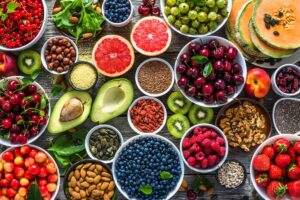 Food that lowers cholesterol
The beneficial effects of Mediterranean and paleo (high-fibre) diets have been confirmed in many studies.
Almonds help by raising HDL and reducing unhealthy LDL. These should be consumed in moderation, given their fattening content. Avocado is excellent for lowering LDL and triglyceride and increasing HDL. Nuts contain polyunsaturated fatty acids that keep your cholesterol in check. Whole grains contain fibre that is effective in lowering LDL.
Beans and legumes take longer to digest and leave people feeling full for longer. Fruits and vegetables are rich in fibre, which slows down cholesterol absorption. Fresh or frozen blueberries are rich in antioxidants and reduce levels of oxidised LDL.
Dark chocolate prevents LDL from being oxidised or damaged. Dark leafy greens, such as kale and spinach, which include carotenoids, are antioxidants and Lutein lowers oxidised LDL to prevent its deposition in arteries. Tomatoes contain lycopene antioxidants. You need 30 mg per day.
Fatty fish or omega 3 lowers LDL and triglyceride but increases HDL. Garlic, as in fresh garlic and garlic supplements, contains powerful allicin. Green, black, and white tea contain EGCG, a potent antioxidant. Extra-virgin olive oil contains monounsaturated fat, raising good and lowering bad cholesterol.
So, my friends, you can see that not all types of cholesterol are equal, but that the avoidance or reversal of ‘bad’ cholesterol’s impact is relatively straightforward. Please share your thoughts and questions by commenting on this piece, and please subscribe to the newsletter so you don’t miss further vital information. Thank you!
References
The functional medicine approach to high cholesterol
https://chriskresser.com/functional-medicine-approach-to-high-cholesterol/
Relation between low-density lipoprotein cholesterol/apolipoprotein B ratio and triglyceride-rich lipoproteins in patients with coronary artery disease and type 2 diabetes mellitus
How is the metabolic syndrome related to the dyslipidaemia?
https://www.ncbi.nlm.nih.gov/pmc/articles/PMC5875077/
Fructose consumption increases the risk of heart disease
https://www.sciencedaily.com/releases/2011/07/110728082558.htm
The functional medicine approach to high cholesterol
https://chriskresser.com/functional-medicine-approach-to-high-cholesterol/
Seven ways to optimise cholesterol
https://drhyman.com/blog/2016/01/14/7-ways-to-optimize-cholesterol/
What causes elevated LDL particle number?
35 healthy recipes for a low-cholesterol diet
https://recipes.net/articles/healthy-recipes-for-low-cholesterol-diet/