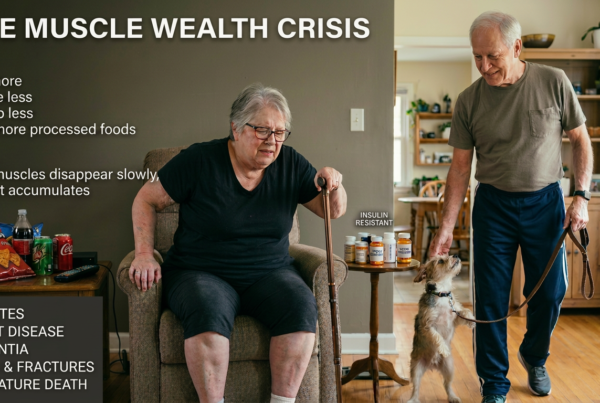
The link between osteoarthritis (OA) and metabolic syndrome is well established. While joint damage may seem irreversible, there is evidence that your joint health can be repaired – as it was for the disabled ex-cyclist who returned on his bike!
Avoiding a knee replacement
This 62-year-old gentleman of Asian origin had an accident when he was 21, resulting in severe left knee pain. This progressed over the years to severe osteoarthritis, limiting his mobility. He was overweight, with a BMI of 29.4. He had also been diagnosed with diabetes and high blood pressure, which was treated with regular medication.
He attended my clinic, hoping to lose weight and reduce his medication. Going through his diet, I found he ate Indian-style curry, high in animal protein, and polished processed white rice. The meals were cooked in cheap vegetable oil, which was also pro-inflammatory.
The patient agreed to replace rice with beans, reduce his animal protein intake, and cook his meals in heat-stable fat, such as coconut or avocado oil. He was also advised to eat more fruit and vegetables and prescribed omega-3 and antioxidants.
He lost weight, his BMI normalised, his blood pressure and blood sugar came into the normal range, and he achieved his goal of controlling his medical conditions with minimal medication within a few months.
At this stage, the patient focused more on his left knee pain. He reported initially that the pain had reduced by 50%, and later, he had minimal pain and unlimited activity.
He had been on the waiting list for a knee replacement for a couple of years. Since his knee pain had significantly resolved, I advised him to ask for an orthopaedics reassessment. He was thrilled that his name was taken off the joint replacement waiting list.
 Even those with advanced arthritis can resume everyday life
This ex-cyclist was devastated to be diagnosed with a series of medical conditions in his 60s and to find himself on several pills for diabetes, high blood pressure, high cholesterol and gout. He came to see me with general lethargy and severe arthritis. He had to sleep in a reclining chair for severe back pain but was not sleeping well. He weighed 103 Kg (BMI 31.5), had a BP of 160/100, high cholesterol at 6.7 and HA1C very high at 9.2 (an indicator of poor diabetic control).
After six months on a personalised healthcare plan that included a healthy diet, regular exercise, and appropriate dietary supplements, he reported that he had lost two stone, his blood pressure and blood sugar had normalised, and his cholesterol and HA1C were slightly off the normal range.
He removed most of his medication and returned to enjoying everyday life, including gardening, household work, and cycling several miles regularly.
This shows that even patients with advanced disease and severe deformity can improve and regain a reasonable quality of life.
The ambiguity about the origin of OA
Mechanical stress due to obesity and overweight is not enough to explain arthritis in non-weight-bearing joints. This article will review how the metabolic crisis interferes with joint energy production and regular joint servicing (repair).
Again, joint depreciation is insufficient to explain the prevalence of OA in old adults and why it worsens with age. Many older adults enjoy excellent joint health up to advanced age.
We also wonder why OA is more common in sedentary people than in athletes who overuse their joints. This raises attention to the role of muscles in the development of OA.
Whatever the underlying cause of OA, we must be vigilant to discover the problem early enough to prevent it. This blog will tell you how to improve your joint health at any stage of OA, with the understanding that there is no hope for a complete cure.
The same culprits are to blame for metabolic syndrome and OA
Research has confirmed that obesity increases the risk of joint pain and stiffness. A heavier load increases joint strain and breaks down the cartilage. However, any sedentary life, such as sitting too long in an office, even in a normal-weight person, shortens and stiffens muscles, increases strain on the joint, and leads to the development of OA.
Belly fat releases inflammatory cytokines, which initiate and speed up the progress of OA. Uric acid, a metabolic byproduct, deposits in joints, triggering inflammation and gouty arthritis.
The research found patients with metabolic syndrome are at high risk of OA. A large meta-analysis revealed that metabolic risk factors, including high BMI, blood glucose and cholesterol, were prevalent in patients with osteoarthritis. The risk increases with the number of metabolic risk factors.
An interesting study demonstrated that a one-unit increase in triglyceride was associated with a 9% increase in the risk of osteoarthritis.
Another study documented that hypertension and decreased HDL (the good guy) cholesterol, two metabolic risk factors, increase the severity of OA symptoms in patients with grade 4 chronic OA.
OA often co-exists with metabolic diseases such as diabetes and heart disease, which are predictive of faster deterioration of the OA.
On the other hand, people with good metabolic health, such as optimum blood pressure and blood sugar, are less likely to suffer OA. Hence, maintaining good metabolic health prevents osteoarthritis.
Osteoarthritis is the most common degenerative arthritis. It can happen at any age but primarily affects middle-aged and older adults and worsens with age.
Osteoarthritis can affect any joint, but it most commonly affects weight-bearing joints, knees, and hips, as well as the small joints of the hands and spine. It is a common cause of lower back pain.
Who is at risk?
Osteoarthritis is more common in older adults, as 80% of those over 75 suffer from it. Obese and overweight people and those who suffer from crystal deposition in joints like gout. Others include those with poor joint alignment, particularly after trauma and bone fractures, and those with hypermobile joints. It is also common in older marathon runners!
Normal joint structure
The bone surface is lined or covered with cartilage, which acts as a cushion or buffering tissue to stop bones from grinding on each other.
The cartilage comprises fewer cells (chondrocytes) supported in a matrix. The cartilage does not benefit from a direct blood supply. Oxygen and nutrients diffuse from the joint (synovial) fluids to nourish the cartilage, delivering less oxygen and nutrients than the surrounding bone and muscles.
 The pathological changes
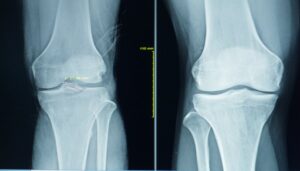
OA starts with mechanical stress due to excess weight, overuse, or weak supportive muscles. This stresses the joint cartilage, leading to focal loss of the cellular component (chondrocytes). Chemical stress mounted by inflammatory cytokines then dissolves the supportive matrix, causing the cartilage to wear down. This weakens the joint structure and triggers underlying (subchondral) bone tissue changes. The bone overgrows, thickens, and expands to form bony growths (spurs).
Mechanical stress alters cartilage metabolism, causing a decline in energy production and leading to further cartilage weakness and degeneration. The bone becomes brittle and raised blood sugar damages it further by oxidative stress (rusting). Broken bone fragments often float in the joint space.
Cartilage breakdown and inflammation damage the integrity of the joint, leading to pain, discomfort, and reduced mobility. Bone spurs also interfere with joint movement.
The joint-covering capsule also thickens, with associated changes in the surrounding ligaments and weakness of the supportive muscles (sarcopenia).
The radiological appearance of OA
The cartilage does not show up on the X-ray. With the loss of cartilage, the joint space narrows. The underlying bone thickens and overgrows, resulting in subchondral bone sclerosis and osteophytes (bone spurs), the Hallmarks of OA. Cyst formation can also limit joint movement.
Symptoms of OA
OA is classified as primary or secondary arthritis of different grades of severity (1 to 4). Primary OA occurs in normal joints. Secondary osteoarthritis occurs in joints with pre-existing abnormalities, the results of infection, trauma, excessive use and joint hypermobility.
It mainly affects the hand, lower back, hip, and knee joints. Patients usually have palpable bony nodes on their hand joints. The classic symptoms include short-lived morning stiffness and pain in extreme movement, restricting joint mobility, weakness of supportive muscles, and change in gait and balance.
Severe disease presents with joint pain at rest, particularly at night, muscle wasting, joint crepitus or grinding sound when joints move and joint deformity.
How do you restore joint health?
Adopting a lifestyle that supports metabolic health will positively impact the joints. This includes a healthy, balanced diet of real food, restful sleep and regular physical activity, which lowers the risk of developing OA and reduces the severity of pre-existing symptoms. Achieving the ideal body weight or normal BMI may restore joint health. Evidence suggests that losing 10% of body weight can reduce joint pain and improve joint mobility and physical function.
Dietary changes
An anti-inflammatory diet is essential for cartilage healing. Fish oil (omega-3) from small oily fish such as salmon, sardines, and mackerel settle chronic low-grade inflammation. Increase your antioxidants by taking rainbow-coloured vegetables; each colour provides different antioxidants like vitamins A, C, and E, particularly berries, peppers, kiwi fruit, citrus, cherries, plums and lycopene in tomatoes. Nuts, seeds and legumes are rich in vitamin E. Ginger, turmeric, dark chocolate and green tea are also great.
Avoid pro-inflammatory omega-6 vegetable oil, which may worsen symptoms and cause disease progression. Increase your intake of mono-unsaturated fats like avocado, nuts and seeds, and reduce saturated fat. A high-protein diet supports appetite and muscle health.
Recent promising research confirmed that a healthy, balanced diet could heal damaged cartilage by providing essential nutrients needed for cartilage and bone healing. These include proteoglycans, collagen, hyaluronic acid, vitamins C and K. Vitamin C encourages collagen production. Vitamin K2 inhibits cartridge calcification and promotes bone health.
 Exercise
OA patients tend to avoid movement and pursue sedentary lives. Pain and restricted joint movement prevent affected people from performing normal daily activities.
Regular physical activity is crucial for repairing the knee cartilage. A specific exercise program is needed to release rigidity, increase joint flexibility, strengthen the supportive muscles to promote healing and reinstate muscle balance.
Heat therapy promotes healing by increasing circulation around the affected joints, and pain relief helps to mobilise the joint.
Therefore, controlling metabolic risk factors will prevent osteoarthritis and reduce symptoms in people with pre-existing diseases. Management should focus on reducing the tension and stiffness around the affected joint, strengthening the joint’s supportive muscles, and aiming for flexible and fully functional joints.
In some cases, repairing or replacing severely damaged joints surgically would be cost-effective.
So, my friends, you can see the clear correlation between the factors that cause metabolic syndrome and those that result in osteoarthritis. As with metabolic syndrome, the steps you can take to reduce, reverse, or avoid OA are straightforward—a real food diet and sensible exercise work together to ensure that you escape this debilitating condition.
Please share your thoughts and questions by commenting on this piece, and please subscribe to the newsletter so you don’t miss further vital information. Thank you!
References
Metabolic syndrome and components exacerbate osteoarthritis symptoms of pain, depression and reduced knee function
https://www.ncbi.nlm.nih.gov/pmc/articles/PMC4842398/
The role of metabolism in chondrocyte dysfunction and the progression of osteoarthritis
https://www.sciencedirect.com/science/article/pii/S1568163720303846#bib0145
Hip osteoarthritis: the four stages
https://www.aberdeenorthopaedics.com/hip-osteoarthritis-the-four-stages/
How to regenerate knee cartilage naturally