
For generations, dinner has been the main meal of the day. It is time to sit down, relax, and eat heartily after work. But our bodies don’t always agree with that cultural habit. From a metabolic perspective, the most strategic time to eat your largest meal is midday. Lunch is your true metabolic power hour.
Understanding why requires a look at your body’s natural rhythms, hormones, and digestion. By aligning eating patterns with biology rather than tradition, you can unlock better energy balance and long-term health.
The Science of Timing: Why Lunch Works Best
Our metabolism isn’t constant throughout the day. It follows a natural daily rhythm, tightly linked with hormones such as cortisol and insulin.
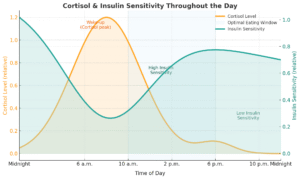
Cortisol and insulin
Cortisol, the “stress hormone,” peaks in the early morning and gradually falls toward the afternoon. One of cortisol’s effects is to antagonise insulin, meaning it makes your body less efficient at processing glucose [2]. By midday, cortisol naturally declines, and insulin sensitivity improves. That’s when your body is most primed to handle a substantial meal [5].
Digestion and sleep
Eating heavily at night places a metabolic burden on the body just when it should be winding down. Digestion slows in the evening, and large dinners can lead to indigestion, poor sleep, and reduced overnight recovery [4]. A heavy evening meal also increases the chance of storing calories as fat rather than using them for energy [3].
Energy rhythms
By eating your largest meal at lunch, you fuel your body at the exact time it needs energy most —during work, activity, and focus. This helps avoid the mid-afternoon slump and reduces cravings that often lead to poor evening snacking [6].
Food Combinations and Digestion Time
Another overlooked factor is how various foods digest at different speeds.
Carbohydrates are generally processed within 3 hours.
Proteins and fats require approximately 5 hours or more.
When carbs and fats are consumed together, blood glucose levels can remain elevated for up to 8 hours after a meal.
This means prolonged hyperglycaemia, resulting in high blood sugar at night that lasts well into the evening, which, over time, can damage blood vessels, nerves, and various body systems.
For this reason, it may be sensible to avoid eating large amounts of carbohydrates, animal proteins, and fats together in one sitting, e.g. a Big Mac and a Big Coke. Instead, focusing on a balanced plate with slow-digesting proteins, moderate complex carbs, and healthy fats in proportion helps reduce this metabolic burden.
Building the Ideal Lunch
If lunch is your metabolic power hour, what should you put on your plate?
The key is to focus on nutrient-dense, protein-rich, balanced foods while avoiding spikes that can lead to energy crashes later in the day.
Protein: The Foundation
Protein is essential at lunch, not only for muscle repair and satiety but also because it digests slowly, helping maintain steady energy throughout the afternoon [1].
Best protein options for lunch:
Lean poultry: chicken, turkey
Grass-fed lean red meats, including beef and lamb
Oily fish: salmon, sardines, mackerel (rich in omega-3s)
Plant-based proteins: lentils, chickpeas and tofu.
Carbohydrates: Quality and Timing Matter
Carbohydrates often get blamed for energy crashes, but the real issue lies in the type and timing. At lunch, carbs are not the enemy. They can be an ally.
Why lunch is the best time for carbs:
At lunch time, your body’s insulin sensitivity is higher [2, 5]. This means you can process glucose more effectively, using it for energy rather than storing it. Any fluctuations in blood sugar are more likely to settle before bedtime, reducing the risk of disturbed sleep [6].
Best carb choices for lunch:
- Whole grains: quinoa, brown rice, oats, farro
- Root vegetables: sweet potatoes, carrots, beets
- Legumes: lentils, beans (double up as protein + fibre)
- Low-glycaemic fruits: berries, apples, pears
Healthy Fats: Sustained Energy
Including healthy fats helps ensure a more balanced energy release and supports brain health. But moderation is key when pairing with carbs to avoid prolonged post-meal glucose elevation.
Great lunch fats include:
- Avocado and Olive oil
- Nuts and seeds (walnuts, pecans, pumpkin seeds)
- Oily fish (double-duty protein plus fat source)
Vegetables: Fibre and Micronutrients
Vegetables add bulk, improve digestion, and provide essential vitamins and minerals. Aim for a colourful plate of rainbow antioxidants. Leafy greens rich in active folate and cruciferous vegetables (broccoli, cauliflower), which support detoxification.
Even if vegetables are harder to tolerate raw, lightly cooking, steaming, or baking often makes them more digestible.
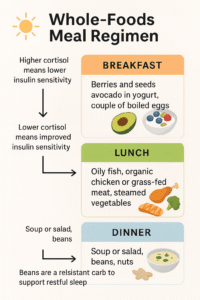
Why Dinner Should Be Lighter
If lunch is the star of the show, dinner should play more of a supporting role. A lighter evening meal gives your body space to rest and repair. Here’s why:
Sleep quality: Heavy dinners slow digestion and may cause reflux or poor sleep [4].
Fat metabolism: Calories consumed at night are more likely to be stored rather than burned [3].
Energy needs: At night, your body doesn’t need the same fuel as during the day.
Examples of ideal evening meals include a vegetable-based soup, salad with protein, or a small serving of fish with roasted vegetables.
The Big Picture
Shifting your main meal to lunch aligns eating with your body’s natural metabolic rhythm. It takes advantage of lower cortisol levels, higher insulin sensitivity, and more efficient digestion during the day. The benefits are clear:
- Better energy and focus during working hours
- Reduced afternoon cravings and fatigue
- Improved digestion and bowel health
- Better sleep quality with lighter dinners
- Support for long-term metabolic health
By making lunch your metabolic power hour, you’re not just eating differently, but you’re eating smarter, in tune with how your body is designed to function.
References
Jakubowicz, D., Barnea, M., Wainstein, J., & Froy, O. (2013). High caloric intake at breakfast vs. dinner differentially influences weight loss of overweight and obese women. Obesity, 21(12), 2504–2512.
Morris, C. J., Yang, J. N., Garcia, J. I., Myers, S., Bozzi, I., Wang, W., & Scheer, F. A. (2015). Endogenous circadian system and circadian misalignment impact glucose tolerance via separate mechanisms in humans. PNAS, 112(17), E2225–E2234.
Garaulet, M., & Gómez-Abellán, P. (2014). Timing of food intake and obesity: a novel association. Physiology & Behavior, 134, 44–50.
Scheer, F. A., Hilton, M. F., Mantzoros, C. S., & Shea, S. A. (2009). Adverse metabolic and cardiovascular consequences of circadian misalignment. PNAS, 106(11), 4453–4458.
Wehrens, S. M., Christou, S., Isherwood, C., Middleton, B., Gibbs, M. A., Archer, S. N., & Skene, D. J. (2017). Meal timing regulates the human circadian system. Current Biology, 27(12), 1768–1775.
Poggiogalle, E., Jamshed, H., & Peterson, C. M. (2018). Circadian regulation of glucose, lipid, and energy metabolism in humans. Metabolism, 84, 11–27.