
Think your healthy breakfast is helping your blood sugar? Discover why morning glucose spikes often begin the night before and how sleep, stress, dinner choices, and breakfast composition shape your metabolism.
The breakfast mystery
You wake with good intentions. Perhaps you choose porridge with honey, granola with yoghurt, wholegrain toast, fruit juice, or a smoothie packed with “natural goodness.” It looks healthy. It feels virtuous. Yet by mid-morning, you are hungry again, tired, irritable, craving coffee or something sweet.
What happened?
For many people, the problem is not a lack of discipline. It is biology.
I see this regularly in patients: they eat what they believe is a healthy breakfast, yet their blood sugar rises sharply afterwards. Sometimes the spike began before breakfast was even served.
Your morning blood sugar is often the result of what happened the previous day and night: what you ate, when you ate, how well you slept, how stressed you were, whether you exercised, and how resilient your metabolism currently is.
Think of your body as a smart financial system. Blood sugar is your cash flow. Glycogen stored in the liver is your savings account. Hormones decide when money is deposited or withdrawn. If the system is stressed, poorly managed, or insulin resistant, glucose can be released at the wrong time, especially in the early morning.
Let’s explore why.

Why blood sugar can rise before breakfast
Many people assume blood sugar should be lowest after an overnight fast. Often that is true. But not always.
In the early morning, your body prepares you to wake up. It does this by releasing hormones such as:
- Cortisol
- Adrenaline
- Growth hormone
- Glucagon
These are part of your natural circadian rhythm. Their job is to help mobilise energy, sharpen alertness, and get you moving.
Imagine a hotel staff preparing breakfast before guests wake. Lights come on, ovens heat up, supplies are moved into place. Your liver does something similar: it starts releasing stored glucose from glycogen to prepare your body for the day ahead.
This process is sometimes called the dawn phenomenon. In a metabolically healthy person, insulin keeps this response well controlled. But if someone is insulin-resistant, stressed, sleep-deprived, or already carrying excess liver glycogen, glucose release may overshoot.
The result: you wake with elevated blood sugar before eating anything.
What happened the day before matters more than most people realise
Morning blood sugar is often the “morning report card” for the previous 24 hours.
- A heavy or late evening meal
A large dinner rich in refined carbohydrates, dessert, alcohol, or frequent late-night snacking can leave the liver stocked with excess glycogen and fat.
Think of stuffing a warehouse to capacity. By morning, there is pressure to move inventory out.
- Poor sleep
Even one short or disrupted night of sleep can reduce insulin sensitivity. Studies show that sleep restriction increases cortisol levels and worsens glucose control.
Poor sleep tells the body: something may be wrong, release more fuel.
- Stress
The body interprets psychological stress as a survival signal. The response is to increase available energy by raising glucose.
Emails, finances, family strain, overwork, and modern stress can produce ancient hormonal reactions.
- Inactivity
Muscles are major glucose sinks. When you move less, less glucose is stored or burned.
A sedentary day often means higher glucose the next morning.
- Existing insulin resistance
When cells stop responding efficiently to insulin, the body compensates by producing more. Over time, this system strains, and glucose becomes harder to control.
Why a “healthy breakfast” can still spike blood sugar
There are two separate issues that often get confused.
- Some foods are marketed as healthy, but may not be metabolically healthy
Many breakfast foods carry a healthy image because they are labelled natural, wholegrain, low-fat, high-fibre, or made with fruit. Yet some of these products are still heavily processed and can contain significant amounts of rapidly absorbed sugars or starches.
Examples include:
- Granola
- Fruit juice
- Smoothies
- Low-fat flavoured yoghurt
- Cereal bars
- Muffins labelled “healthy”
These foods may look wholesome, but labels do not always predict how they affect blood sugar. They may be quickly digested into glucose, especially when low in protein, fibre, and healthy fats.
It is like adding more cars onto a motorway that is already congested.
- Even genuinely healthy foods can still spike blood sugar in some people
Other foods may be nutritious and perfectly reasonable choices, yet still produce a significant glucose rise in certain individuals, especially those with insulin resistance, poor sleep, stress, elevated fasting glucose, or reduced metabolic flexibility.
Examples may include:
- Porridge or oats
- Wholegrain toast
- Bananas or other fruit
- Rice-based breakfasts
- Homemade smoothies with fruit
This does not mean these foods are bad. It means that the body’s response can differ from person to person.
The key message
A food can be healthy in principle, yet not ideal for your metabolism at that moment.
Think of breakfast like fuel: premium fuel in one engine may perform badly in another if the engine is already under strain. The question is not only “Is this food healthy?” but also “How does my body handle it today?”

The breakfast test: Healthy for whom?
A food is not healthy simply because it is labelled ‘natural’, ‘low-fat’, ‘wholegrain’ or ‘plant-based’.
A better question is:
How does this breakfast behave in your body?
Two people can eat the same bowl of oats and have completely different glucose responses.
One person rises gently and feels satisfied for hours. Other spikes sharply, crashes mid-morning, and feels hungry again.
Personal metabolism matters.
How to improve the whole picture
The solution is not merely changing breakfast. It is improving the 24-hour metabolic cycle.
- Upgrade the evening meal
Choose dinners built around:
- protein (fish, chicken, eggs, tofu, Greek yoghurt)
- vegetables
- legumes
- healthy fats
- modest portions of whole-food carbohydrates if tolerated
Avoid large late meals, desserts, grazing, and alcohol excess.
- Protect sleep like medicine
Aim for:
- Consistent bedtime
- Dark cool room
- Reduced evening screens
- Limiting caffeine late in the day
- Avoiding heavy meals close to bedtime
Good sleep improves insulin sensitivity overnight.
- Move after meals
Even a 10–20 minute walk after dinner can improve glucose disposal.
Your muscles act like glucose sponges.
- Rethink breakfast composition
Try a breakfast centred on protein + fibre + healthy fat, such as:
- eggs with vegetables
- Greek yoghurt with nuts and berries
- cottage cheese and seeds
- smoked salmon and avocado
- chia pudding with protein added
- tofu scramble
These tend to slow glucose absorption and improve satiety.
- Consider delaying breakfast
Some people do better to wait until true hunger appears, especially if they are not hungry in the morning.
This is not for everyone, but a shorter eating window may help some individuals.
- Measure, don’t guess
If appropriate, consider:
- fasting glucose
- HbA1c
- fasting insulin
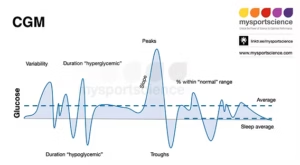
- continuous glucose monitoring (CGM)
Data can reveal patterns invisible to guesswork.
A Simple picture:
Imagine your blood sugar system as a bathtub.
- The tap is glucose entering from food, and the liver releases it
- The drain is insulin, helping glucose leave the blood into cells
If the tap is running fast and the drain is partly blocked, the tub overflows.
Many people focus only on breakfast (the tap from food), while ignoring the liver tap already running (releasing glucose) before breakfast.
Breakfast is only the final chapter of a story that began yesterday!
If your blood sugar spikes after a healthy breakfast, breakfast may not be the real culprit.
The story may have started with yesterday’s stress, poor sleep, inactivity, alcohol, late-night snacking, insulin resistance, or an overloaded liver releasing glucose before dawn.
Breakfast then becomes the final push, not the original cause.
The smartest strategy is to stop judging food by labels and start judging health by physiology.
Your morning numbers often reflect yesterday’s habits.
So here is the discussion worth having:
Should we stop asking “Is this breakfast healthy?” and start asking “Is this breakfast healthy for my metabolism today?”
That shift could transform how we prevent diabetes, weight gain, fatigue, and metabolic disease.
What breakfast keeps you steady and energised?
Frequently Asked Questions (FAQ)
- Why is my blood sugar high when I wake up without eating?
This may be due to the dawn phenomenon, stress hormones, poor sleep, insulin resistance, or late-night eating.
- Is oatmeal bad for blood sugar?
Not necessarily. Some people tolerate oats well, others spike significantly. Portion size, preparation, and what you eat with it matter.
- What is the best breakfast for stable glucose?
Usually one rich in protein, fibre, and healthy fats with fewer refined carbohydrates.
- Can poor sleep raise blood sugar?
Yes. Even a single poor night can worsen insulin sensitivity and increase cortisol levels.
- Should everyone skip breakfast?
No. Some thrive with breakfast; others do better delaying it. Personalisation matters.
References
- Reutrakul S, Van Cauter E. Sleep influences on obesity, insulin resistance, and risk of type 2 diabetes. Metabolism. 2018;84:56-66. doi:10.1016/j.metabol.2018.02.010.
- Speksnijder EM, Kalsbeek A, la Fleur SE. Circadian desynchrony and glucose metabolism. J Pineal Res. 2024;76(3):e12956. doi:10.1111/jpi.12956.
- Zeevi D, Korem T, Zmora N, Israeli D, Rothschild D, Weinberger A, et al. Personalised nutrition by prediction of glycemic responses. Cell. 2015;163(5):1079-1094. doi:10.1016/j.cell.2015.11.001.
- Monnier L, Colette C, Dejager S, Owens D. Magnitude of the dawn phenomenon and its impact on the overall glucose exposure in type 2 diabetes: is this of concern? Diabetes Care. 2013;36(12):4057-4062. doi:10.2337/dc13-1027.
- Monnier L, Colette C, Dejager S, Owens D. The dawn phenomenon in type 2 diabetes: how to assess it in clinical practice? Diabetes Metab. 2015;41(2):132-137. doi:10.1016/j.diabet.2014.10.002.
- Bravo-Garcia AP, Reddy AJ, Radford BE, Hawley JA, Parr EB. Modifying the timing of breakfast improves postprandial glycaemia in people with type 2 diabetes: a randomised controlled trial. Diabetes Metab Syndr. 2024;18(11-12):103157. doi:10.1016/j.dsx.2024.103157.
- DiPietro L, Gribok A, Stevens MS, Hamm LF, Rumpler W. Three 15-minute bouts of moderate postmeal walking significantly improve 24-hour glycemic control in older people at risk for impaired glucose tolerance. Diabetes Care. 2013;36(10):3262-3268. doi:10.2337/dc13-0084.
- Battelino T, Danne T, Bergenstal RM, Amiel SA, Beck R, Biester T, et al. Clinical targets for continuous glucose monitoring data interpretation: recommendations from the International Consensus on Time in Range. Diabetes Care. 2019;42(8):1593-1603. doi:10.2337/dci19-0028.


